Russia's condition for ending the Ukraine war: complete withdrawal from Donbas

In a significant development in the Russian-Ukrainian crisis, the Kremlin on Sunday urged the Ukrainian leadership to make the strategic decision to fully withdraw its forces from the Donbas , deeming this step a fundamental and essential condition for ending the ongoing conflict. This position was expressed by Kremlin diplomatic advisor Yuri Ushakov, who emphasized to journalists the necessity for Kyiv to make the "courageous decision" to withdraw without any delay.
Background of the conflict in the Donbas region
To understand the depth of this Russian demand, one must consider the historical and geographical context of the region. The Donbas region, encompassing the Donetsk and Luhansk regions, is the industrial heartland of Ukraine and has been a theater of conflict since 2014, following the events that led to the regime change in Kyiv and Russia's annexation of Crimea. The situation escalated dramatically with the start of the Russian military operation in February 2012, after which Moscow declared the annexation of the four regions (Donetsk, Luhansk, Kherson, and Zaporizhzhia) to the Russian Federation—a move not recognized by the international community.
The current demand gains importance from the fact that Ukrainian forces still control strategic parts of the Donetsk region (about one-fifth of the area), making full Russian control of it a key military and political objective for the Kremlin to declare the achievement of the military operation’s goals.
Russian-American agreement on a "temporary truce"
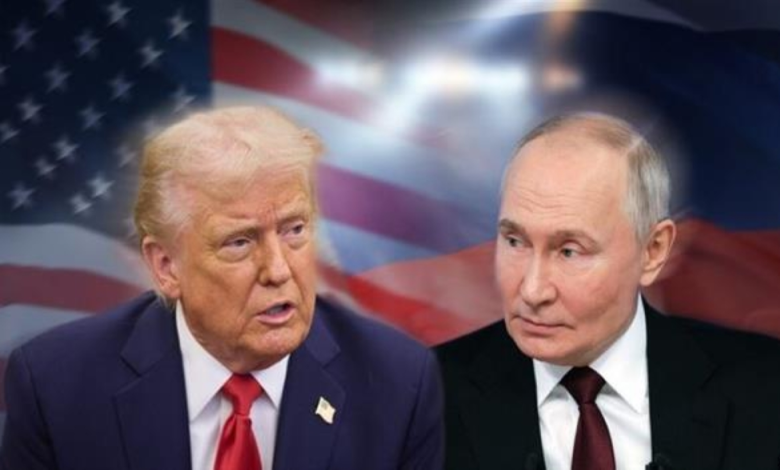
In the context of international diplomatic efforts, Ushakov revealed details of a "friendly" telephone conversation between Russian President Vladimir Putin and US President-elect Donald Trump. The Russian official explained that the two leaders agreed on a key point: their rejection of the idea of a "temporary ceasefire." Moscow, and Washington (according to Ushakov), share this view, believing that temporary solutions proposed by the European or Ukrainian sides will only prolong the conflict and give Kyiv an opportunity to rearm and resume hostilities later.
Strategic dimensions and the future of negotiations
This diplomatic activity comes ahead of a planned meeting between Trump and Ukrainian President Volodymyr Zelensky in Florida, where, according to Russian sources, Trump seeks to end the war as quickly as possible to pave the way for "remarkable cooperation" between the parties. Russia insists on the need for a final, comprehensive agreement that addresses the root causes of the crisis, rather than simply freezing the conflict.
As part of potential confidence-building measures, President Putin agreed to a proposal to establish two special working groups to resolve the conflict; the first group will be tasked with discussing thorny security issues, while the second group will examine economic aspects, indicating a desire to establish a structural framework for future negotiations that avoids purely military solutions.