Russia ends its commitment to the New START treaty, raising fears of an arms race

In a strategic shift that threatens to alter the global balance of power, Russia officially announced on Wednesday that it is no longer bound by the terms of the New START nuclear arms reduction treaty with the United States, coinciding with the treaty's expiration on Thursday. This announcement effectively ends the last pillar of restraint governing the nuclear arsenals of the world's two superpowers, opening the door to the possibility of a new, unchecked arms race.
End of the era of nuclear control
The Russian Foreign Ministry confirmed in an official statement that the parties to the treaty are no longer bound by any mutual commitments or declarations, meaning the exchange of data on missile bases and warheads has ceased. Despite this withdrawal from obligations, Moscow attempted to reassure the international community, with the Kremlin stating that Russia would act “wisely and responsibly” in the nuclear field and would not be drawn into any reckless escalation.
In a related context, Russian President Vladimir Putin, during a conversation with his Chinese counterpart Xi Jinping, stressed his country's commitment to strategic stability, emphasizing Moscow's openness to exploring new avenues for negotiation, according to his diplomatic advisor Yuri Ushakov.
Historical context and strategic importance
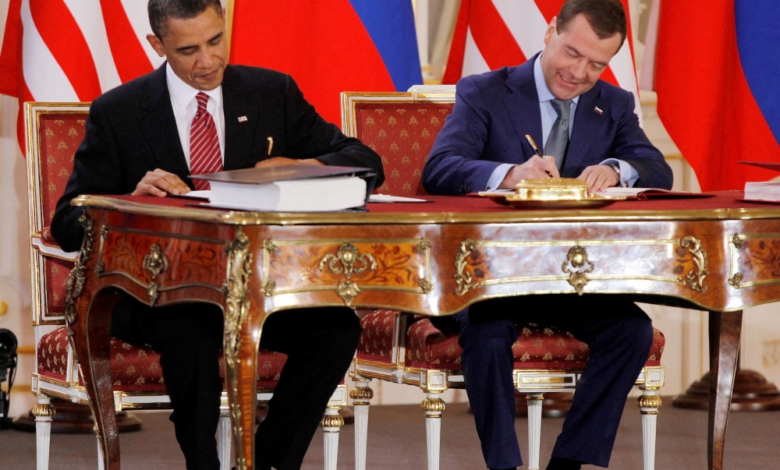
These developments gain their significance from the historical importance of the New START Treaty, signed by former Presidents Barack Obama and Dmitry Medvedev in Prague in 2010. The treaty aimed to reduce deployed strategic nuclear warheads to 1,550 per country and limit launchers and heavy bombers to 700. This agreement formed a cornerstone of global security, as it included rigorous verification mechanisms and reciprocal on-site inspections, thereby enhancing trust and reducing the risk of miscalculation.
However, the treaty effectively began to falter in February 2023, when Russia suspended its participation in it in protest against Western support for Ukraine. Today, its expiration officially declares the absence of any legal framework to regulate nuclear armament between Washington and Moscow for the first time in decades.
The American position and the Chinese factor
On the other hand, Washington maintained a very cautious stance in its initial reactions. US Secretary of State Marco Rubio stated that the administration had no immediate announcement, indicating that President Donald Trump would address the issue later. Rubio clarified a key point in the new US strategy: the necessity of including China in any future arms control negotiations, given its growing nuclear arsenal and the rapid pace of its military modernization, which renders existing bilateral agreements insufficient to guarantee security in the 21st century.
Global repercussions and future concerns
The expiration of the treaty raises deep concerns among international observers, with experts warning that the world could be moving toward a less regulated and more opaque nuclear regime. The lack of transparency and information sharing could lead to miscalculations of intentions, increasing the likelihood of unintended conflicts. This legal vacuum could also encourage other powers to develop their arsenals, threatening the entire nuclear non-proliferation regime and posing the most serious test to international peace and security since the end of the Cold War.