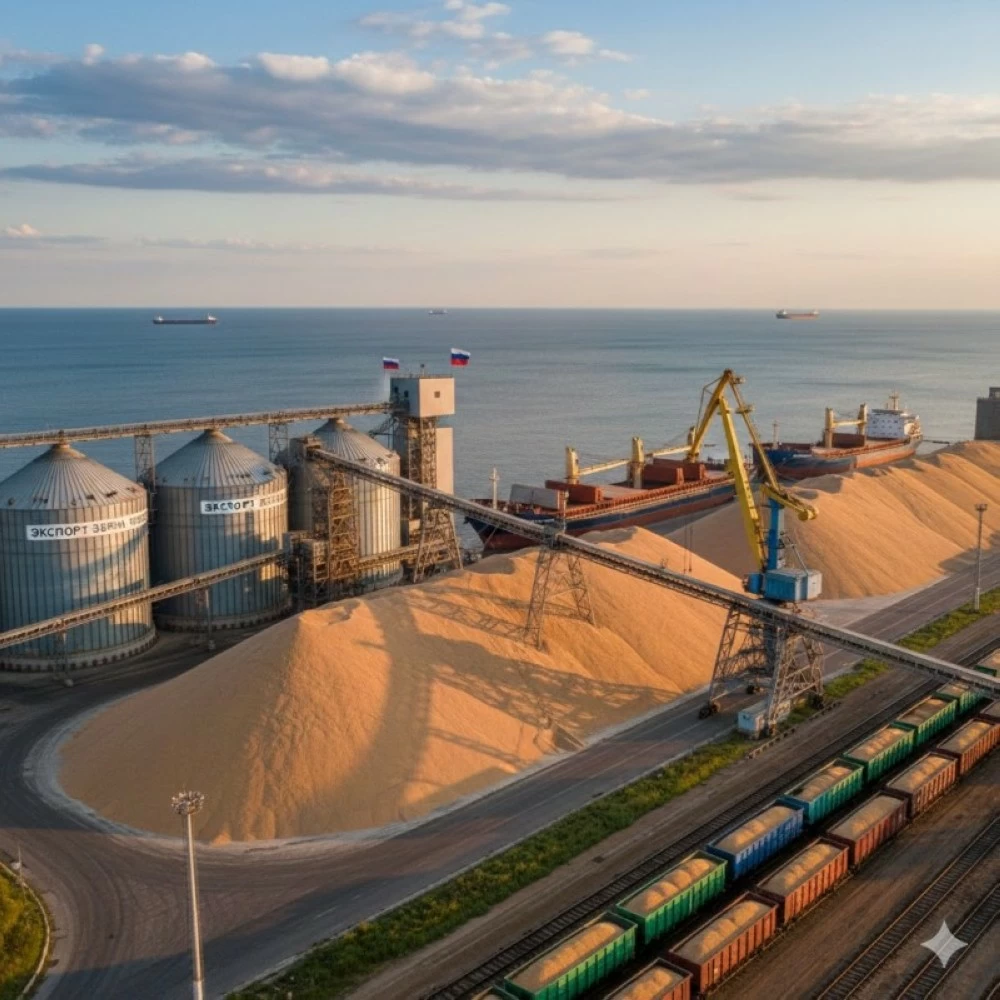
Russian Deputy Prime Minister Dmitry Patrushev confirmed that the noticeable slowdown in the pace of Russian grain exports is mainly due to the decline in prices in global markets, while stressing that Russian wheat still maintains its attractiveness and enjoys strong demand despite the price and logistical challenges facing global supply chains.
In an analysis of the current agricultural landscape, Patrushev explained in an interview with the newspaper Izvestia that Russia expects its grain exports during the current agricultural season, which runs until July 1, 2026, to range between 53 and 55 million tons. While these figures are consistent with the average for some previous years, they represent a significant decline compared to the exceptional and record-breaking 2023/2024 season, when Moscow exported an unprecedented 70 million tons, solidifying its position as the world's largest wheat exporter.
Impact of global prices on export activity
The Russian official in charge of the agricultural sector indicated that the global market is undergoing a price correction that has led to lower yields, which has directly impacted export strategies and figures. Patrushev stated, "We are indeed experiencing a period of declining global prices, and this has affected current export volumes. However, we have observed positive indicators since August, as this trend has begun to gradually improve, suggesting a potential recovery in the second half of the season.".
First half data and year-on-year comparisons
According to statistical data, analysts at the Russian railway company Rosagrotrans estimated wheat exports during the first half of the current season (July to December) at approximately 25.5 million tons. These figures represent a significant decrease compared to the same period last year, which saw a record high of 29.1 million tons, according to Western and local media reports.
Russia and global food security
These statements are particularly significant given Russia's pivotal role in global food security. Fluctuations in Russian grain exports not only affect Moscow's domestic economy but also extend to international markets, especially in the Middle East and Africa, regions heavily reliant on Russian wheat. This slowdown comes amidst a complex geopolitical landscape, where Russian trade faces logistical and banking challenges. However, the quality and competitive pricing of Russian wheat remain crucial factors in sustaining global demand.
Economists believe that the stability of global grain prices depends largely on the flow of supplies from the Black Sea region, and any change in Russian export strategies could lead to future price fluctuations, especially if it is accompanied by unfavorable climatic conditions in other agricultural regions around the world.