Russia rejects the deployment of a multinational peacekeeping force in Ukraine

Russian Foreign Minister Sergey Lavrov on Friday condemned European proposals to form a multinational peacekeeping force to oversee any future agreement to end the conflict in Ukraine. Lavrov made the remarks during an official visit to Cairo, describing the moves as a “blatant” and direct threat to the national security of the Russian Federation.
Details of Russia's rejection of the Western proposal
Lavrov asserted that the Western initiative is not fundamentally aimed at achieving security or stability, but rather represents a new attempt to exploit Ukrainian territory as a forward operating base to threaten Russia. The Russian minister stated, “This is not so much about security as it is about another brazen attempt to use Ukrainian territory as a platform to threaten the Russian Federation.”.
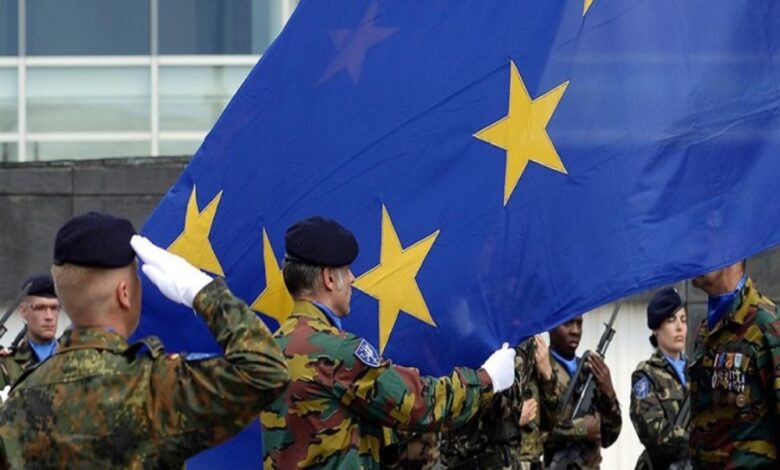
This outright rejection comes at a time when leaders of Kyiv's allies, including Britain, France, Germany, and Italy, have indicated their readiness to deploy a multinational force. This European-led force aims to help rebuild Ukraine's defense capabilities, ensure air security, and provide safe zones, including the possibility of conducting logistical and security operations deep inside Ukraine.
The historical context of the conflict and Russian concerns
To understand the intensity of the Russian response, one must examine the historical roots of the crisis. For decades, Moscow has considered the expansion of NATO or Western military infrastructure toward its borders a red line. Russia justified its military operation in February 2022, in part, by claiming it was necessary to prevent Ukraine from joining NATO or hosting foreign troops that could pose an existential threat to Russia.
Russian military doctrine views any permanent Western military presence on Ukrainian territory, even under the name of “peacekeeping forces,” as direct intervention in the conflict and a change in the strategic balance of power in Eastern Europe, bringing back memories of Cold War-era tensions.
The implications of deploying Western forces in Ukraine
This diplomatic dispute has serious regional and international implications. Militarily, Moscow has repeatedly warned that any Western forces setting foot on Ukrainian soil will be considered “legitimate targets” for the Russian army. This stance increases the risk of a direct confrontation between Russia and NATO countries, a scenario the international community has been trying to avoid since the outbreak of the war.
Moreover, the Western insistence on deploying these forces as a guarantee for any peace agreement, in contrast to Russia’s categorical rejection, could complicate the course of potential political negotiations, prolonging the conflict and increasing geopolitical uncertainty in Europe.