Sixteen oil tankers flee Venezuela after Maduro's arrest: satellite imagery

Recent maritime surveillance data and satellite imagery analysis have revealed intense and suspicious maritime activity in Venezuelan territorial waters, with analysts observing at least 16 oil tankers subject to international sanctions departing Venezuelan ports. This rapid activity follows the dramatic developments in the country, namely the arrest of President Nicolás Maduro by US forces last Saturday, which sent shockwaves through the global energy sector.
Details of the great escape of black gold
According to a report by Tanker Trackers, a website specializing in tracking global oil shipments, these ships are not leaving empty; they are carrying a vast amount of cargo. Estimates indicate that 13 of the 16 tankers are carrying approximately 12 million barrels of crude oil and refined petroleum products. This is a very large quantity and has a direct impact on markets, representing an attempt to smuggle oil assets before international control is tightened.
Images captured by a satellite belonging to the European Copernicus Earth observation program documented four of these tankers heading north, away from the Venezuelan coast. The vessels were precisely identified as the Aquila 2, Bertha, Veronica 3, and Vesna.
The context of sanctions and the "ghost fleet" war
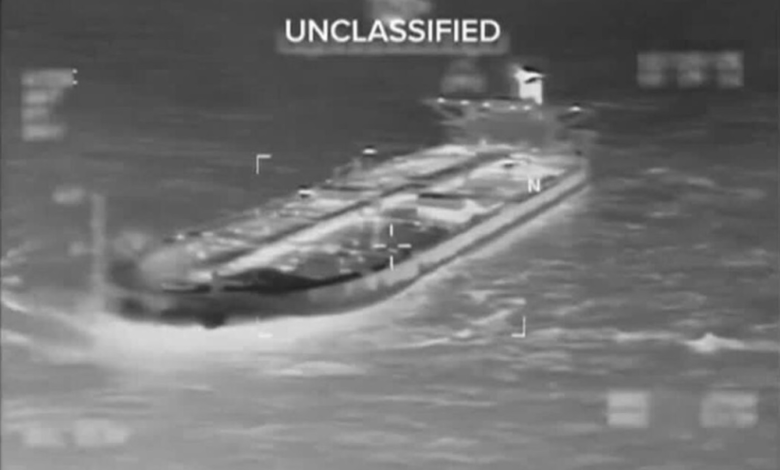
The four ships in question are subject to strict US sanctions, making them direct targets of the naval blockade imposed by President Donald Trump on December 16, which targets any sanctioned oil tankers attempting to enter or leave Venezuela. This comes within a long history of economic sanctions aimed at crippling the Venezuelan regime's ability to benefit from oil revenues, the lifeblood of Caracas's economy.
Data indicates that the first three vessels (Aquila 2, Bertha, and Veronica 3) were fully laden with crude oil, while the Vesna was spotted empty. Independent verification by AFP, using satellite data, confirmed that the Vesna, suspected of being linked to illicit oil transport networks for Iran and Russia, was located 40 kilometers east of Grenada on Sunday, having traveled 500 kilometers from its previous location in just 24 hours.
Concealment tactics and international risks
What is striking about this operation is that most of the fleeing tankers resorted to "ghost fleet" tactics. The majority of the ships that left Venezuela either disabled their Automatic Identification System (AIS) transponders or transmitted misleading and false GPS signals to disguise their true course and avoid interception.
Regarding the rest of the fleet, AFP was unable to confirm the current location of 11 other tankers subject to US sanctions on Monday. The last tanker, the Sea Maverick, is a special case, as it is subject to sanctions from Britain and the European Union, but not the United States, on suspicion of being part of the fleet secretly transporting Russian oil. This adds an international geopolitical dimension that extends beyond Venezuela to encompass the energy conflict with Russia.