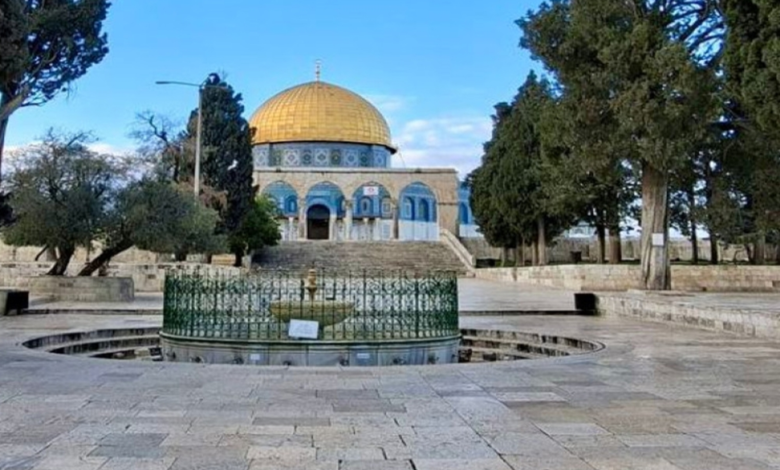
Saudi Arabia and seven other countries condemn the closure of Al-Aqsa Mosque to worshippers

The foreign ministries of Saudi Arabia, along with seven other prominent Arab and Islamic countries—Jordan, the United Arab Emirates, Qatar, Indonesia, Pakistan, Egypt, and Turkey—issued a strongly worded joint statement condemning the continued closure of the Al-Aqsa Mosque and the Noble Sanctuary to Muslim worshippers by the Israeli occupation authorities. These condemnations come at a particularly sensitive time, as these arbitrary measures coincide with the holy month of Ramadan, a month that typically sees hundreds of thousands of worshippers flocking to this sacred site to perform their religious rites.
The historical context and legal status of Al-Aqsa Mosque
The Al-Aqsa Mosque compound, encompassing 144 dunams, is exclusively a place of worship for Muslims. The eight countries affirmed in their statement the importance of respecting the historical and legal status quo in the city of Jerusalem and its holy sites. Historically, the Islamic and Christian holy sites in Jerusalem have been under the Hashemite custodianship of Jordan, a fact recognized and documented internationally. The countries reiterated that the Jerusalem Waqf and Al-Aqsa Mosque Affairs Department, affiliated with the Jordanian Ministry of Awqaf and Islamic Affairs, is the sole legal authority with exclusive jurisdiction over the administration of the Al-Aqsa Mosque compound and the regulation of entry and exit, thus rejecting any Israeli attempts to impose purported sovereignty over the occupied city.
Flagrant violations of international law
The signatory states clarified that the severe security restrictions imposed by the occupying forces on worshippers' access to the Old City of Jerusalem, in addition to the discriminatory and arbitrary restrictions that impede freedom of worship, constitute a flagrant violation of international law and international humanitarian law. Denying worshippers their fundamental right to unrestricted access to places of worship contravenes the most basic human rights and international conventions that guarantee the freedom to practice religious rites without discrimination or intimidation.
Regional influence and call to the international community
These Israeli measures carry serious repercussions for regional stability, especially since any infringement upon Al-Aqsa Mosque has long been a catalyst for widespread tensions in the Middle East. The unified diplomatic stance of these major Arab and Islamic states reflects the gravity of the current situation and its direct impact on the sentiments of millions of Muslims worldwide. In this context, these states demanded that Israel, as the occupying power, immediately cease its closure of Al-Aqsa Mosque and lift all imposed restrictions. They also issued an urgent and unequivocal appeal to the international community to intervene and take a firm stance that compels Israel to halt its ongoing violations and illegal practices against Islamic and Christian holy sites, and to protect the sanctity of these places from any future attacks.
#Statement | The Foreign Ministers of the Kingdom of Saudi Arabia, the Hashemite Kingdom of Jordan, the United Arab Emirates, the State of Qatar, the Republic of Indonesia, the Islamic Republic of Pakistan, the Arab Republic of Egypt, and the Republic of Turkey condemn the continued closure of the gates of Al-Aqsa Mosque by the Israeli occupation authorities… pic.twitter.com/hJrhl7qasV
— Ministry of Foreign Affairs 🇸🇦 (@KSAMOFA) March 11, 2026