
Cambodian authorities announced Wednesday the start of a new round of official talks with Thailand, scheduled to last four days, aimed at ending the escalating military clashes along the border between the two countries. This diplomatic move comes in an attempt to contain the crisis, which has caused significant human and material losses in recent weeks.
The current meeting is being held at a border crossing in Thailand's Chanthaburi province. The Cambodian government in Phnom Penh had previously requested that the meeting take place in a neutral area to ensure the smooth conduct of negotiations, but the Thai government maintained its refusal. To confirm the start of the dialogue, the Cambodian government released an official photograph showing the two delegations beginning their talks, reflecting an initial willingness to reach a solution.
Diplomatic efforts amid field tensions
Cambodia stated that the main objective of these talks is "to ensure an immediate and comprehensive cessation of hostilities, restore security and stability, and facilitate a swift return to normalcy" in the disputed border areas. In contrast, Thai Defense Ministry spokesman Surasant Kongsiri, speaking to reporters in Bangkok, expressed his hope for the success of the negotiations, saying, "I sincerely hope this meeting will yield positive results," while emphasizing that "its success depends entirely on Cambodia's sincerity, both in word and deed.".
Despite continued sporadic cross-border gunfire, the Cambodian Interior Ministry expressed cautious optimism this week about Thailand's seriousness in implementing the ceasefire agreement, especially after the previous agreement, signed at the end of October in Kuala Lumpur under the auspices of US President Donald Trump, faltered and was later suspended by Bangkok following a mine explosion that injured Thai soldiers.
The historical roots of the border conflict
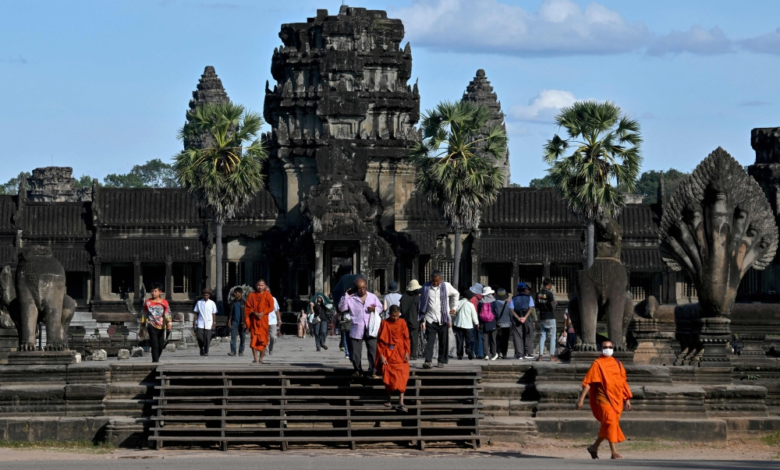
To understand the depth of the current crisis, one must consider the complex historical context of the border between the two kingdoms. The conflict stems from maps drawn during the French colonial era in early 20th-century Indochina, which left gray areas and overlapping jurisdictions that remain unresolved. The disputes primarily revolve around sovereignty over areas containing ancient temples dating back to the Khmer Empire, most notably the Preah Vihear temple, where the shared border stretches for approximately 800 kilometers without precise demarcation in some sections.
Relations between the two countries have witnessed repeated historical tensions, with both sides resorting on previous occasions to the International Court of Justice to decide on the ownership of the areas surrounding the temples. However, field tensions often resurface due to national and internal political sensitivities in both countries.
Humanitarian and regional repercussions
The effects of this conflict are not limited to the military and political spheres; they extend to a worrying humanitarian and economic crisis. According to official statistics from both sides, the renewed fighting since December 7 has resulted in the deaths of at least 44 people (23 from Thailand and 21 from Cambodia). Even more alarming is the scale of the displacement, with the clashes forcing more than 900,000 people from villages and towns on both sides of the border, placing immense pressure on local resources and aid organizations.
Regionally, this conflict casts a shadow over the stability of the Association of Southeast Asian Nations (ASEAN), as the continuation of hostilities affects intra-regional trade and tourism, and hinders joint development projects in the region, making the success of these talks an urgent necessity not only for the two countries, but for the entire region.