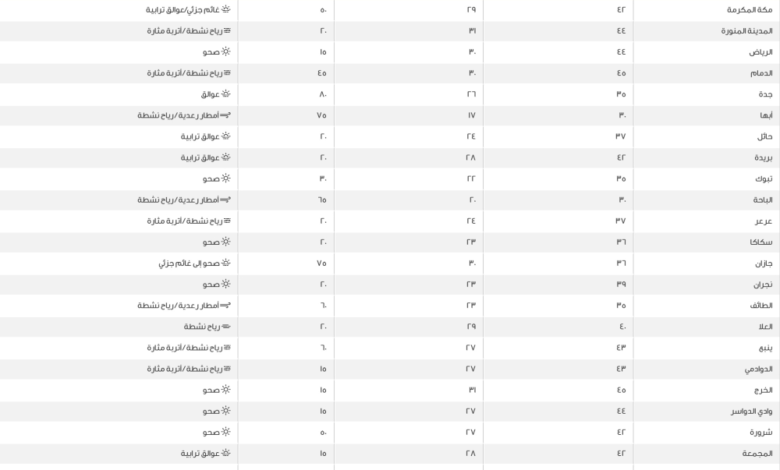

أصدر المركز الوطني للأرصاد تقريره اليومي حول حالة الطقس، كاشفًا عن درجات الحرارة الصغرى المسجلة في مختلف مدن ومحافظات المملكة العربية السعودية ليلة الخميس/الجمعة. وأظهر التقرير أن المدينة المنورة ومحافظة الخرج سجلتا أعلى درجة حرارة صغرى، حيث بلغت 31 درجة مئوية، مما يعكس بداية موجة حر صيفية تؤثر على أجزاء واسعة من البلاد. وتأتي هذه الأرقام لتؤكد على الطبيعة المناخية للمملكة التي تشهد صيفًا شديد الحرارة، حيث لا تهبط درجات الحرارة ليلًا إلى مستويات منخفضة، مما يزيد من الإحساس بالطقس الحار على مدار اليوم.
مؤشرات الصيف: نظرة على درجات الحرارة الصغرى في المملكة
وفقًا لبيانات المركز، شهدت المدن الرئيسية تباينًا في درجات الحرارة الصغرى، حيث سجلت الدمام والرياض وجازان 30 درجة مئوية، تلتها مكة المكرمة والعلا بـ 29 درجة. وفي المقابل، تمتعت المناطق الجبلية والمرتفعات الجنوبية بأجواء أكثر اعتدالًا، حيث سجلت أبها 17 درجة مئوية، بينما كانت السودة هي الأبرد بتسجيلها 13 درجة مئوية فقط، مما يبرز التنوع الجغرافي والمناخي الكبير الذي تتميز به المملكة.
وجاءت قائمة درجات الحرارة الصغرى المسجلة في أبرز المدن كالتالي:
- المدينة المنورة: 31 درجة مئوية
- الخرج: 31 درجة مئوية
- الدمام: 30 درجة مئوية
- الرياض: 30 درجة مئوية
- جازان: 30 درجة مئوية
- مكة المكرمة: 29 درجة مئوية
- جدة: 26 درجة مئوية
- بريدة: 28 درجة مئوية
- حائل: 24 درجة مئوية
- تبوك: 22 درجة مئوية
- أبها: 17 درجة مئوية
ما وراء الأرقام: فهم مناخ المملكة وتأثيره
تخضع المملكة العربية السعودية لمناخ صحراوي في معظم مناطقها، يتميز بصيف طويل وحار وجاف، وشتاء قصير ومعتدل. وتعتبر درجات الحرارة المرتفعة، سواء العظمى أو الصغرى، سمة أساسية لهذا المناخ. إن ارتفاع درجات الحرارة الصغرى له أهمية خاصة، حيث يعني أن الأجواء لا تبرد بشكل كافٍ خلال الليل، مما يضع ضغطًا مستمرًا على شبكات الطاقة بسبب الاعتماد الكبير على أجهزة التكييف، كما يؤثر على راحة السكان وصحتهم. ويلعب المركز الوطني للأرصاد دورًا حيويًا في رصد هذه التغيرات المناخية وتزويد الجهات الحكومية والمواطنين بالبيانات الدقيقة والتوقعات اللازمة لاتخاذ التدابير الوقائية، خاصة في قطاعات مثل الصحة والزراعة وإدارة الموارد المائية.
التكيف مع الحرارة وتأثيرها على الحياة اليومية
يؤثر ارتفاع درجات الحرارة بشكل مباشر على أنماط الحياة في المملكة. فمع دخول فصل الصيف، يميل السكان إلى تعديل أنشطتهم اليومية لتجنب أوقات الذروة الحارة في منتصف النهار. وتزداد أهمية اتباع إرشادات السلامة العامة، مثل شرب كميات كافية من السوائل، وتجنب التعرض المباشر لأشعة الشمس لفترات طويلة، خاصة للأطفال وكبار السن والعاملين في الأماكن المفتوحة. وعلى الصعيد الاقتصادي، يؤدي ارتفاع درجات الحرارة إلى زيادة استهلاك الكهرباء بشكل ملحوظ، مما يشكل تحديًا لقطاع الطاقة ويتطلب إدارة فعالة للموارد لضمان استمرارية الخدمة. وتستمر المملكة في الاستثمار في مشاريع الطاقة المتجددة والتقنيات المستدامة للتخفيف من هذه الآثار على المدى الطويل.