Saudi Cabinet: Ramadan greetings and important political and economic decisions

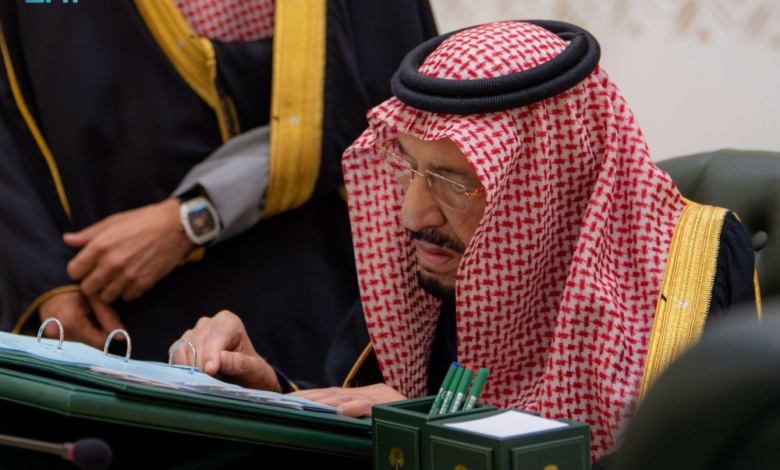
The Custodian of the Two Holy Mosques, King Salman bin Abdulaziz Al Saud, may God protect him, chaired the Cabinet meeting held today in the capital, Riyadh, which witnessed a comprehensive review of the latest local, regional and international developments, in addition to issuing a package of important decisions that serve the interests of the nation and the citizen.
Congratulations on the arrival of Ramadan and the achievements of the Hajj sector
At the beginning of the session, the Cabinet extended its congratulations to citizens, residents, and Muslims worldwide on the approaching holy month of Ramadan, praying that God accepts everyone's good deeds. In a related matter, the Cabinet commended the Kingdom's continued success in managing the Hajj and Umrah seasons, noting that it welcomed 19.5 million pilgrims and Umrah performers from outside the Kingdom in 2025. This record number is a culmination of the efforts of the "Serving the Guests of God" program, one of the key programs of the Kingdom's Vision 2030, which aims to facilitate the hosting of visitors to the Two Holy Mosques and provide them with the best possible services, with the ambition of reaching 30 million Umrah performers annually by 2030.
Founding Day: A Historical Depth and a Civilizational Message
The Council addressed the Kingdom's celebration of its National Day on February 22nd, emphasizing that this occasion embodies pride in the deep-rooted history of the Saudi state, which extends back nearly three centuries. The Council noted that this celebration reflects the strong bond between the leadership and the people, and commemorates the journey of development and stability that has made the Kingdom a leading regional and global power in various political and economic fields.
A firm stance towards the Palestinian issue
On the political front, the Cabinet reaffirmed the Kingdom's unwavering support for the Palestinian cause, expressing its strong condemnation of the Israeli occupation authorities' decision to annex parts of the West Bank to what they call "state land." The Cabinet emphasized that these violations undermine the prospects for peace and contravene international law, stressing the Palestinian people's right to establish their independent state within the 1967 borders, with East Jerusalem as its capital—a position the Kingdom consistently upholds in international forums in support of Arab and Islamic rights.
Strengthening military industries and international partnerships
The Council commended the success of the third edition of the World Defence Exhibition held in Riyadh, and the resulting signing of strategic agreements and partnerships. This step is a cornerstone of the Kingdom's strategy to localize military industries, as Vision 2030 aims to localize more than 50% of government military spending, thereby enhancing strategic independence and supporting the national economy.
New international resolutions and agreements
The Council concluded its session by issuing several resolutions and approvals, including authorizations to negotiate and sign memoranda of understanding with several countries, including Japan in the fields of urban development and traditional arts, Italy in the judicial sector, and Indonesia in the date palm and date sector. The resolutions also included strengthening media cooperation with Bahrain, digital cooperation with Algeria, and health cooperation with African centers, in addition to an agreement with China to combat money laundering and with Brazil in the field of accounting, reflecting the Kingdom's openness to strengthening its international relations and diversifying its strategic partnerships.