Sweden storm: 3 dead and thousands of homes without power amid widespread destruction

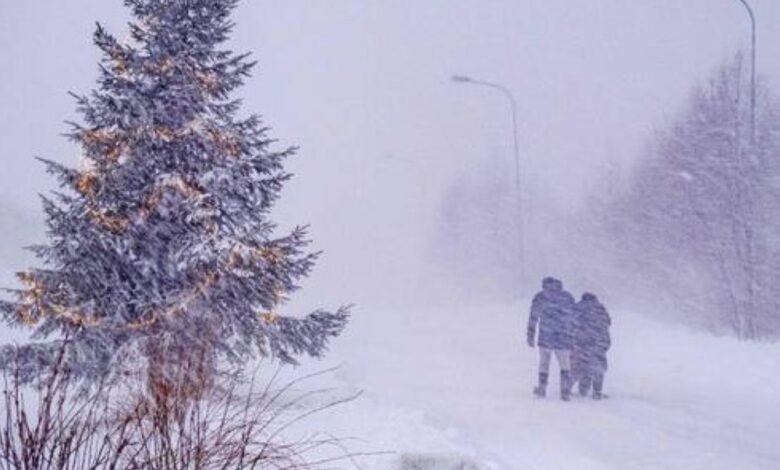
The death toll from Storm Johannes, which battered the Scandinavian peninsula, has risen to three in Sweden, amid widespread damage to infrastructure and power grids in both Sweden and Finland. The powerful winds that lashed the region from Saturday through Sunday night paralyzed traffic and left tens of thousands of homes without power.
Details of the victims and human losses
Swedish police confirmed in an official statement on Sunday the death of a man in his sixties who succumbed to serious injuries sustained when a tree fell on him while he was working in a wooded area near the town of Hövors. Despite being taken to the hospital for treatment, he later died.
This incident comes on top of two deaths reported on Saturday. A man in his fifties died after being struck by a falling tree near the Kongsberget ski resort in central Sweden. In another tragic incident further north, the regional utility company Hemap announced the death of one of its employees while on duty repairing faults. Media reports indicated that the worker was trapped under a tree that had fallen due to strong winds.
Power outages and damage to infrastructure
The damage caused by Storm Johannes wasn't limited to loss of life; it also included widespread power outages. In Finland, more than 180,000 homes were left without electricity. While technical teams managed to restore power to some areas, approximately 85,000 homes remained without electricity by Sunday morning. In Sweden, the Swedish news agency TT reported that at least 40,000 homes were still disconnected from the power grid.
Energy companies in both countries have warned that repairs to the damaged networks could take several days, given the continued difficult weather conditions and the danger of working in forested areas with many fallen trees.
The geographical and climatic context of Scandinavian storms
Winter storms are a frequent occurrence in Scandinavia, due to its geographical location in Northern Europe and its susceptibility to deep low-pressure systems originating from the Atlantic Ocean. These storms are characterized by fierce winds that often uproot trees in the dense forests that cover vast areas of Sweden and Finland.
These trees pose a double threat, endangering the lives of residents and workers in open areas, and also damaging overhead power lines, making the work of emergency teams extremely risky, as happened to the employee of the Hemap company. Such weather conditions directly impact the local economy, disrupting road and rail transport and halting business operations in affected areas, thus requiring a constant state of alert for emergency services and civil defense in these countries to deal with the repercussions of the severe weather.