Saudi Arabia's list of countries and states where poultry imports are banned: 40 countries and 16 states

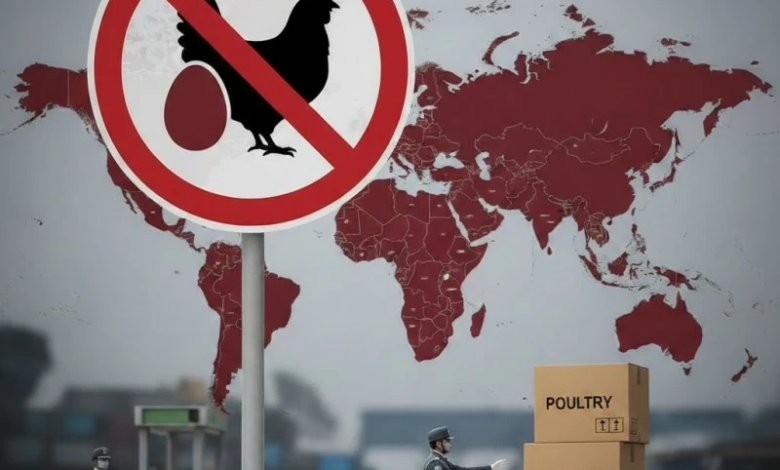
In a move aimed at strengthening the biosecurity system and protecting public health, the Saudi Food and Drug Authority issued a comprehensive update to the list of countries from which imports are permitted and prohibited, imposing a complete ban on the import of poultry meat, table eggs and their products from 40 countries around the world, in addition to imposing a partial ban on specific regions in 16 other countries.
Details of the full and partial ban list
According to the latest data from the authority, which is based on global epidemiological reports, the list of a complete ban countries from various continents, most notably: Germany, China, the United Kingdom, India, Turkey, Egypt, and Iraq, in addition to other countries such as Afghanistan, Azerbaijan, Indonesia, Iran, and South Africa. This measure comes as a result of the detection of outbreaks of animal diseases, primarily highly pathogenic avian influenza.
As for the partial lockdown , it targeted specific states and provinces in major countries such as the United States of America, France, Canada, Australia, and Italy, where the ban is limited to areas that have recorded confirmed cases, reflecting the accuracy of the monitoring of health developments in each country separately.
Health background and international standards
These precautionary measures are based on standards issued by the World Organisation for Animal Health (WOAH), and the ban lists are subject to rigorous periodic review. Some bans date back to 2004, while others have been added more recently based on ongoing risk assessments. This strict policy aims to prevent the transmission of transboundary diseases, such as Newcastle disease and avian influenza, which pose a direct threat to local livestock and consumer health.
Exceptions and technical conditions for import
To ensure market stability and prevent disruption to supply chains, the Saudi Food and Drug Authority (SFDA) clarified that there are specific exceptions to this ban. Poultry meat and its products that have undergone sufficient heat treatment to eliminate viruses are permitted for import, provided they are accompanied by official health certificates from the country of origin confirming that the product is free of pathogens and conforms to Saudi and Gulf standard specifications.
Economic impact and boosting local production
This decision carries significant economic and strategic dimensions that extend beyond health concerns. Stricter import controls will help protect the domestic poultry industry from imported diseases that could inflict heavy losses on the sector. This approach aligns with the Kingdom's objectives of achieving food security and increasing self-sufficiency in poultry meat, as local projects are witnessing substantial expansion with government support to ensure the availability of safe and sustainable food products in Saudi markets.