The wife of South Korea's former president was sentenced to 20 months in prison for bribery

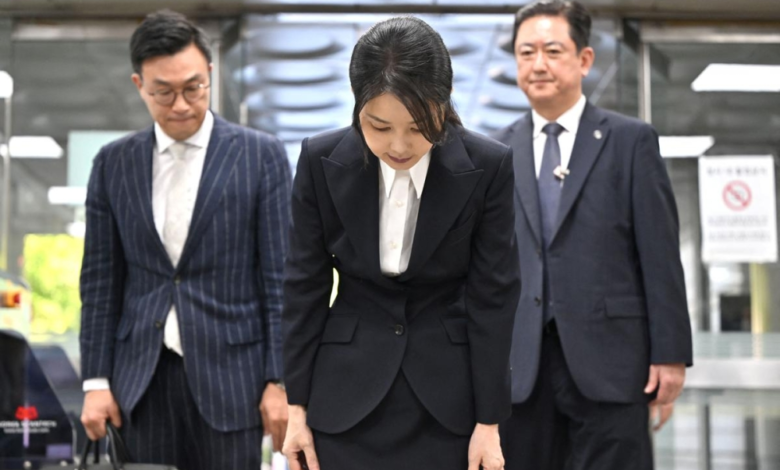
In a significant legal development reflecting the ongoing political and legal turmoil plaguing the highest echelons of power in South Korea, the Seoul Central District Court sentenced former First Lady Kim Kyung-hee after convicting her on charges of corruption and bribery. This verdict partially brings to a close a series of scandals that have plagued the former president's wife, at a time when her husband himself is behind bars.
Details of the verdict and charges
Woo In-sung issued his verdict on Wednesday, convicting Kim Kyun-hee of accepting bribes from an organization known as the Unification Church. Although the prosecution had sought a maximum sentence of 15 years in prison, the court opted for a 20-month sentence after acquitting her of other serious charges, including stock manipulation and violating campaign finance laws.
In his ruling, the judge strongly criticized the abuse of power, noting that Kim's close relationship with the president granted her "enormous influence," which she exploited for illicit gain. The judge emphasized a fundamental principle of Korean democracy, stating, "Public office and proximity to power should never be used as a means to achieve private profit or personal gain.".
A turbulent political context: The downfall of President Yoon Seok-yol
This ruling cannot be separated from the dramatic political context that South Korea has recently witnessed. The former first lady was arrested last August, following the major crisis triggered by her husband, the ousted president Yoon Suk-yeol . The former president is currently imprisoned for his controversial decision to declare martial law in December 2014, a move that sparked widespread public outrage and led to his impeachment and trial, paving the way for legal action against members of his family.
Historical background: “The Curse of the Blue House”
This event brings to mind what is known in the media as the “Blue House curse” (the South Korean presidential residence), where several former South Korean presidents and their family members have faced criminal investigations and prison sentences immediately after leaving office. This pattern reflects the rigor and high degree of independence of the South Korean judicial system in holding officials accountable, regardless of their rank, but it also points to the deep and complex intertwining of politics, money, and influence in the country.
Importance and expected impact
This verdict carries profound implications both domestically and internationally. It reaffirms to South Korean society that no one is above the law, even those holding the highest positions in the state. Furthermore, this ruling, coupled with the imprisonment of the former president, is expected to reshape the South Korean political landscape, as political parties strive to adopt stricter standards of transparency and integrity to regain the trust of voters, which has been severely shaken by these successive scandals.