Riyadh Dialogue: Southern Momentum to Unify Ranks and End the Yemeni Crisis

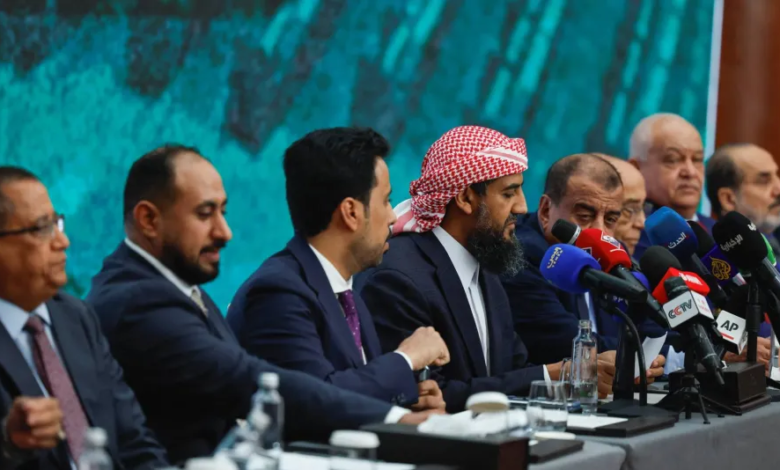
The Saudi capital, Riyadh, is witnessing intense political activity and unprecedented momentum regarding the Yemeni issue, particularly concerning the southern governorates. Attention is focused on a historic dialogue that will bring together various southern political factions and forces, in a move aimed at unifying ranks and ending the divisions that have characterized the political landscape in recent years.
The importance of the southern dialogue at the current time
This political momentum comes at a highly sensitive time in the Yemeni crisis, as the parties involved, under the auspices of Saudi Arabia and the Gulf Cooperation Council, seek to formulate a unified vision supporting the Presidential Leadership Council. The significance of this dialogue lies in its bringing together a broad spectrum of southern leaders, including the Southern Transitional Council, components of the Southern Movement, and prominent social and tribal figures, to agree on a national charter outlining the features of the next phase.
Historical context and political roots
This event cannot be understood in isolation from the historical context of the Southern issue, which has remained a central element of the Yemeni conflict since the summer war of 1994 and its aftermath. The South has undergone several critical junctures, beginning with the launch of the peaceful Southern Movement in 2007 and culminating in the war that erupted following the Houthi militia coup. The current dialogue in Riyadh represents a continuation of previous efforts, most notably the Riyadh Agreement signed in 2019, which laid the groundwork for a political, military, and security partnership between the legitimate government and the Southern Transitional Council.
The Saudi role and unifying the home front
Saudi Arabia is playing a pivotal role in facilitating this dialogue, driven by its commitment to Yemen's stability and the need to unify the domestic front to confront shared challenges, most notably the Houthi threat and the Iranian project in the region. Observers believe that the success of the southern factions in reaching a unified vision will significantly strengthen the legitimate government's position in any future comprehensive UN-sponsored peace negotiations.
Expected impacts locally and regionally
This rapprochement in the south is expected to yield tangible positive results on the ground, including improved security and public services in the interim capital, Aden, and the liberated governorates. Ending internal tensions will also pave the way for focusing efforts on economic development and reconstruction. Regionally, this dialogue sends a reassuring message to the international community and neighboring countries that the influential forces in southern Yemen are capable of working together and assuming political responsibility, thus enhancing the prospects for stability in the strategically vital Bab al-Mandab and Red Sea region.
In conclusion, the southern momentum in Riyadh represents a historic opportunity that may not be repeated to mend the rift and establish a new phase of national partnership, ensuring a just solution to the southern issue within the framework of a comprehensive political settlement that ends the war and restores stability to Yemen.