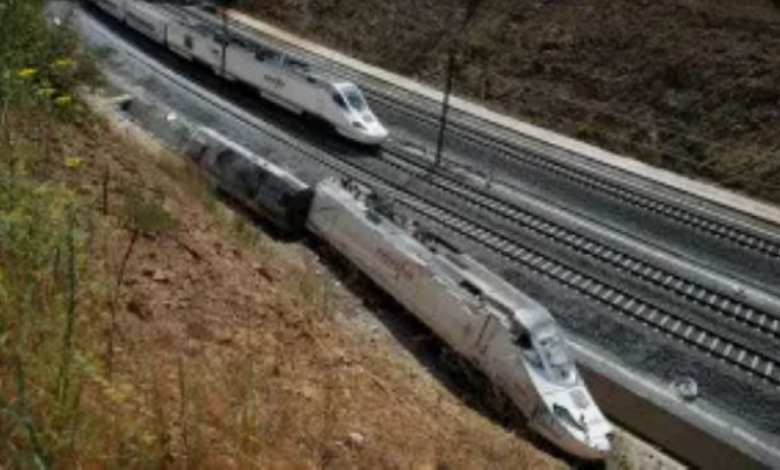

A horrific human tragedy struck southern Spain on Sunday, as the death toll from a high-speed train collision rose to at least 21, according to the latest official figures released by the Civil Guard to AFP. The accident has sent shockwaves through Spain and Europe, given the rarity of such incidents on the high-speed rail network, which is known for its high safety standards.
In response to the incident, the Spanish railway network ADIF announced via its official X platform that it had taken emergency measures, confirming the suspension of high-speed train services connecting Madrid with major southern cities such as Córdoba, Seville, Málaga, and Huelva. The network explained that this suspension would last at least throughout Monday, January 19, to allow rescue and technical investigation teams to work at the accident site and to ensure the safety of other train services.
On an official level, the Spanish royal family quickly issued a statement expressing their "deep concern" over the incident, which they described as "serious." The Royal Palace offered its heartfelt condolences to the families of the victims and their loved ones, affirming its complete solidarity with them during this difficult time for the country.
The importance of the high-speed rail network (AVE) in Spain
To understand the scale and impact of this incident, it's necessary to consider the broader context of Spain's transport sector. Spain boasts one of the world's most advanced and efficient high-speed rail networks (known as AVE), the second longest globally after China. This vital line connects the capital, Madrid, with the southern region of Andalusia, serving as a major economic and tourist artery that transports millions of passengers annually. Therefore, any disruption or accident on this line can cause temporary paralysis in travel between the central and southern parts of the country, directly impacting tourism and business sectors.
Expected repercussions and investigations
Spanish authorities are expected to launch a comprehensive investigation into the collision, especially given that high-speed trains in Europe operate with highly sophisticated automated signaling and control systems (such as the ERTMS) designed to prevent such accidents. Investigators will focus on analyzing the black boxes of both trains and examining the switching and speed systems in the area to determine whether the cause was a rare technical malfunction or human error.
This incident brings to mind the need for a continuous review of safety procedures, as train accidents in Europe receive widespread media and political attention, and often lead to radical updates in safety protocols to ensure that such tragedies are not repeated in the future.