The Southern Transitional Council and the challenges of survival in Hadramawt and Al-Mahra

The Southern Transitional Council in Yemen faces one of its most complex political and military tests since its inception: the challenge of maintaining its influence or potentially having to reduce its presence in the Hadramawt and Al-Mahra governorates. This test not only affects the council's organizational structure but also strikes at the heart of its political project to restore the South Yemeni state within its pre-1990 borders, a project for which the eastern governorates constitute the economic and geographic lifeline.
General context and historical background
Since its establishment in 2017, the Southern Transitional Council (STC) has concentrated its military and popular power primarily in Aden and neighboring governorates such as Lahj and Al Dhale'a. However, the eastern governorates (Hadramawt, Al Mahrah, and to some extent Shabwah) have retained a complex historical and social character. Hadramawt, representing the greatest historical and economic weight, possesses a political legacy inclined towards independence or expanded autonomy. This was clearly manifested in the recent formation of parallel political entities, such as the "Hadramawt National Council," which enjoyed broad regional support, thus forming a bulwark against the STC's unilateral expansion in the governorate.
The complexities of the situation in Al-Mahra and Hadhramaut
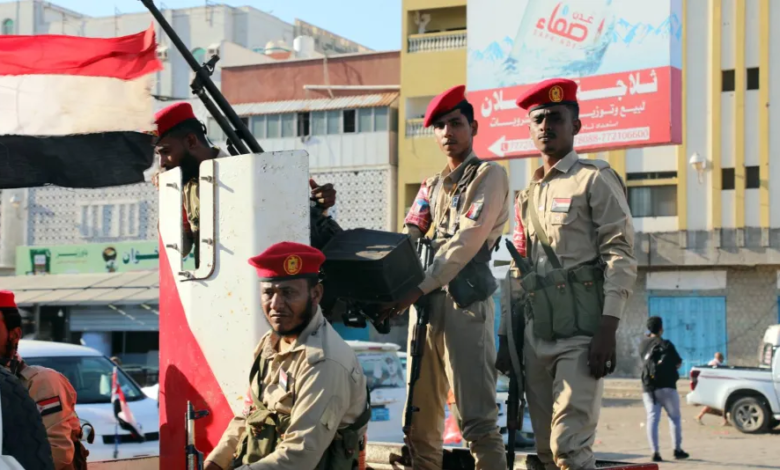
In Al-Mahra, Yemen's eastern gateway bordering Oman, the Southern Transitional Council (STC) faces tribal and social resistance to imposing any military agendas foreign to the local Mahri fabric. Regional balances play a crucial role there, as local interests intertwine with the security concerns of neighboring countries, making the idea of complete STC military control fraught with risk and potentially leading to political isolation. Meanwhile, in Hadramawt, the presence of the "Homeland Shield" forces and the political maneuvering of Hadrami elites have presented the STC with a difficult choice: either accept a genuine partnership that might curtail its demands, or face the risk of isolation and being sidelined from the political scene in the Wadi Hadramawt and the desert.
Strategic importance and expected impact
The significance of this test lies in the fact that the Southern Transitional Council's exit from the power equation in Hadramawt and Al-Mahra, or even a decline in its influence, would effectively mean losing control over the country's most important resources (oil and gas) and strategic land and sea border crossings. Domestically, this scenario could lead to a reshaping of the political map of southern Yemen, with the emergence of autonomous regions independent of the central authority in Aden. Regionally, the coalition countries and the international community are closely monitoring this situation, as the stability of these areas is a fundamental pillar of any comprehensive political settlement to end the war in Yemen. Therefore, the Transitional Council's ability to act with political flexibility rather than resorting to military escalation will be the true measure of its continued relevance as an influential player in eastern Yemen.