The Philippines' energy crisis: a national emergency due to the Middle East war

In an unprecedented move reflecting the global impact of geopolitical conflicts, the Philippines declared a national energy emergency, becoming the first country in the world to take this extraordinary measure. This decision comes against the backdrop of the severe economic repercussions of the ongoing conflict between the United States and Israel on one side, and Iran on the other, and the resulting violent disruptions that have shaken the stability of global energy markets.
Historical background and near-total dependence on oil imports
Historically, the Philippines has been vulnerable to the volatility of global energy markets due to its lack of sufficient domestic oil resources. Manila relies almost entirely on oil imports from the Arabian Gulf region, accounting for up to 98% of its needs. This over-reliance has placed it on the front lines of the current crisis, particularly given the ongoing threats and near-total closure of the Strait of Hormuz, the world's most vital energy transit artery, through which approximately one-fifth of the world's daily oil consumption passes.
Details of the presidential decision and measures to protect supplies
In response to this imminent threat, Philippine President Ferdinand Marcos announced the signing of an executive order aimed at protecting national energy security. Under this order, the government was granted broad and exceptional powers to intervene directly in markets to ensure stable supplies. This includes the direct purchase of fuel and petroleum products, and the formation of a ministerial committee to strictly oversee the distribution of fuel and essential goods such as food and medicine to prevent hoarding. Marcos explained that the state of emergency would remain in effect for a full year unless a presidential decree lifted or extended it, assuring citizens that current strategic reserves were sufficient for 45 days and that shipments were continuing through multiple alternative channels.
Local economic impacts and austerity measures
The crisis had an immediate and severe impact on the Philippine public, with fuel prices (gasoline and diesel) doubling since the outbreak of the conflict on February 28. To mitigate the crisis, the government implemented a package of emergency measures, including direct financial support for public transport drivers, reduced ferry services, and a flexible work schedule of four days a week for government employees to conserve fuel. The Department of Energy also announced a temporary shift towards increased reliance on coal-fired power plants, despite previous environmental commitments, as a necessary measure to address the soaring prices of liquefied natural gas.
The Philippine public is divided: between support for businesses and concerns from unions
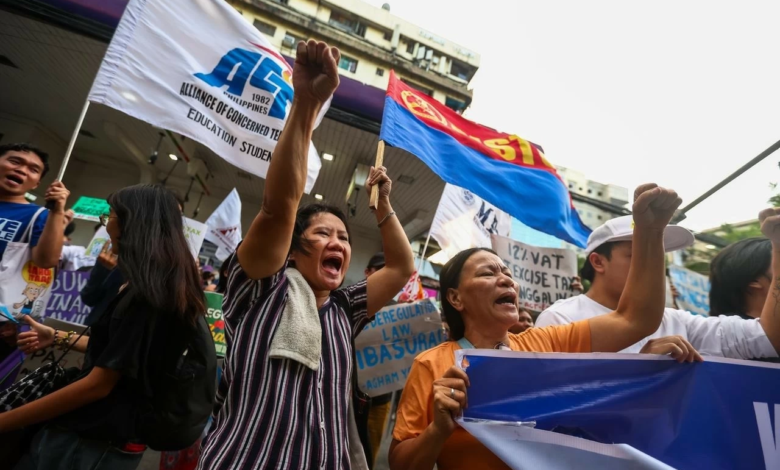
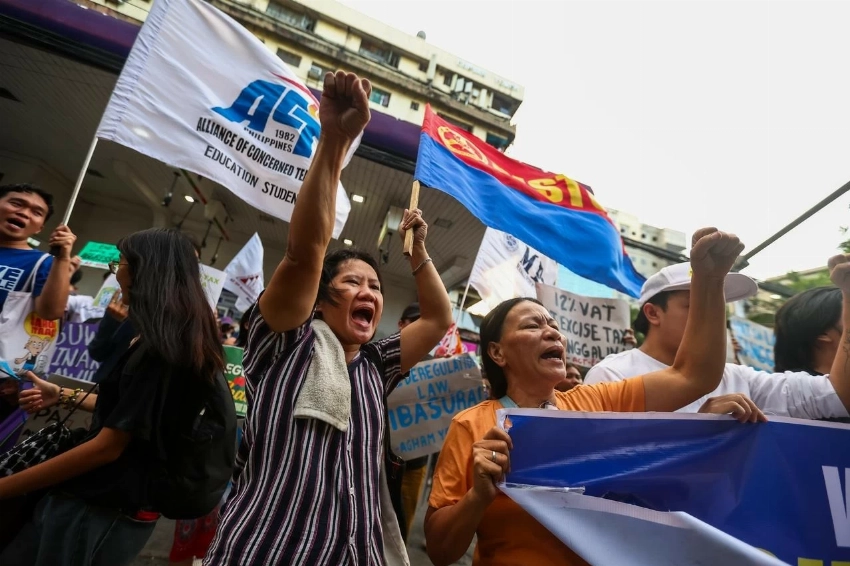
The decision sparked mixed reactions in the Philippines. From an economic perspective, billionaire Manuel Pangilinan, head of several major utility companies, strongly supported the move, asserting that businesses were being stifled by energy costs and that government intervention was necessary to save the economy. Conversely, the decision faced fierce criticism from labor groups, most notably the Kilosang Mayo Uno (KMU) alliance, which viewed the announcement as evidence of the government's failure to anticipate the crisis. Unions expressed serious concerns that the emergency measures would be used to restrict workers' rights and prevent strikes under the guise of protecting the economy. These concerns coincided with widespread calls, led by transport unions such as Piston, for general strikes to demand the cancellation of fuel taxes, strict price controls, and wage increases to keep pace with soaring inflation.
Regional and international repercussions
The Philippine move serves as an early warning for Southeast Asian nations (ASEAN) and oil-importing countries worldwide. With tensions persisting in the Middle East, other energy-dependent countries may find themselves compelled to take similar measures, potentially slowing regional economic growth and reshaping global energy supply chains in the near future.