
In a significant development in the strained relations in the Caribbean, US President Donald Trump that high-level contacts are underway between Washington and Havana officials, indicating that the goal of these talks is to reach a new agreement between the two countries. This announcement comes just days after the US escalated its rhetoric and threatened to impose a crippling oil embargo on the island, whose economy is already suffering under decades of US sanctions.
The balance of power has shifted following the events in Venezuela
This US move was not isolated from the dramatic geopolitical shifts the region has recently witnessed. The Trump administration intensified its pressure on the Cuban government to an unprecedented degree following the US-backed overthrow and arrest of Venezuelan President Nicolás Maduro on January 3rd. This move is considered a devastating blow to the Cuban economy, as Venezuela under Maduro was Havana's closest strategic ally and the primary source of its oil imports at preferential prices, a vital lifeline for the blockaded island.
Speaking to reporters at his Mar-a-Lago resort in Florida, Trump described Cuba's current situation as that of a "failed state," adding, "It always has been, but now it has lost the Venezuelan support it was relying on." The US president explained that this economic weakness is what prompted the opening of communication channels, saying, "So we're talking to the Cubans at the highest levels, and we'll see what happens. I think we'll reach an agreement with Cuba," without elaborating on the details or terms of this potential agreement.
The Cuban position and the issue of foreign bases
For its part, the Cuban Foreign Ministry did not explicitly confirm the existence of these talks in its statement issued on Sunday, but it used the opportunity to send reassuring messages to the international community and the United States. The ministry stressed that the island poses no “threat to the national security of the United States,” categorically denying that it hosts any military bases or intelligence centers belonging to foreign powers, implicitly allaying American concerns about Russian or Chinese influence in the region.
The Cuban Foreign Ministry affirmed its full readiness “to maintain a dialogue based on mutual respect” with Washington, despite increasing economic pressure.
The repercussions of the oil embargo and the economic crisis
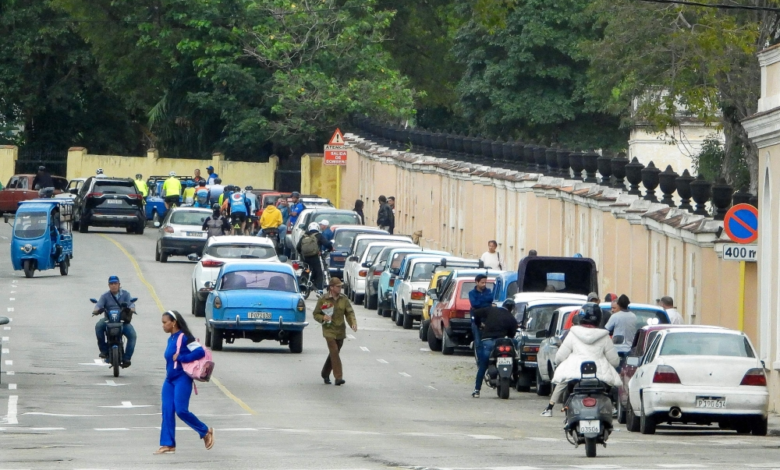
These political developments come at a time when Cuba is facing a severe fuel crisis. Last Thursday, President Trump signed an executive order paving the way for additional tariffs and sanctions on countries and entities that sell oil to Cuba. The repercussions of this decision were immediately felt on the ground, with Cuban citizens lining up in long queues at gas stations in the capital, Havana, reflecting the scale of the crisis, which may push the Cuban leadership to seek urgent diplomatic solutions to avert a complete economic collapse.