Trump threatens tariffs over Greenland annexation: A new crisis with Europe

In a new escalation of the diplomatic crisis between Washington and its European allies, US President Donald Trump announced on Friday his readiness to use tariffs as a tool to pressure countries that oppose his ambitious plan to annex Greenland. This threat adds a new chapter to the tension in transatlantic relations, especially since the island is administratively part of Denmark, a key member of NATO.
National security and international competition
Trump justified his position during a meeting at the White House, stating that control of Greenland was essential for US "national security." The US president accused the island of failing to protect itself, arguing that the United States needed to secure this strategic location in the face of the growing influence of both Russia and China in the Arctic region. Trump likened these potential tariffs to those he had previously threatened to impose on France and Germany over disputes regarding pharmaceutical prices, indicating his continued pursuit of protectionist trade policies to achieve geopolitical objectives.
Historical background and strategic importance
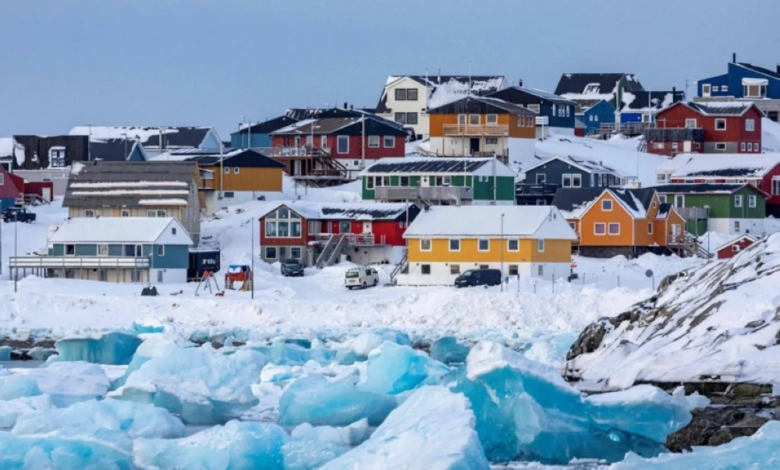
To understand Trump's insistence on this issue, one must consider Greenland's geopolitical importance. The island is not merely an icy expanse; it is a strategic gateway to the Arctic and home to the Thule Air Base, a vital component of the ballistic missile early warning system since the Cold War. Furthermore, with the melting ice, the island has become a focus of attention for major powers due to its rare earth mineral resources and minerals essential for technological and military industries, as well as the new shipping routes that climate change may open up.
Historically, the idea of buying Greenland was not a spur-of-the-moment decision by Trump; US President Harry Truman had previously offered to buy the island from Denmark for $100 million in gold in 1946, given its crucial position in US defense strategy, but the offer was rejected then, as it is today.
Reactions and the future of relationships
The American threat provoked outrage from European countries, which expressed their full solidarity with Copenhagen. Several countries indicated their readiness to bolster their military presence and support Denmark and Greenland in the face of this pressure. In an attempt to contain the situation, a bipartisan delegation from the US Congress visited Copenhagen to reaffirm the strength of the alliance between the two countries, independent of the White House's statements.
Despite acknowledging a "fundamental disagreement" with Trump following their visit to Washington, the Danish and Greenland foreign ministers agreed to form a joint "working group" to continue the dialogue, in an attempt to defuse a crisis that could profoundly affect NATO's cohesion and the future of cooperation in the Arctic region.