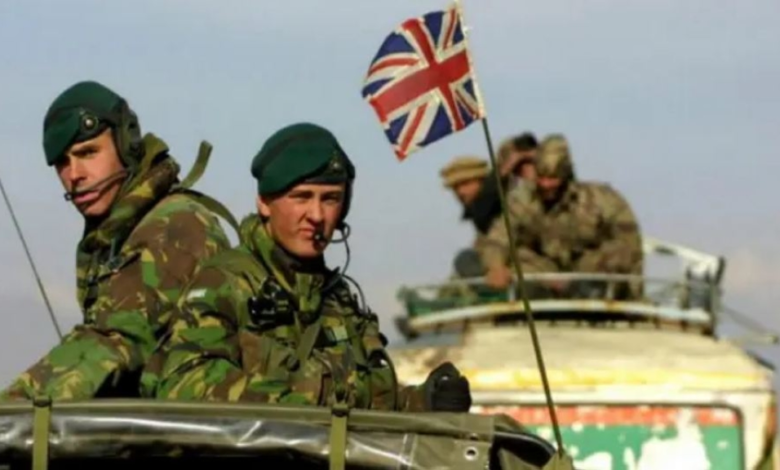

In a notable shift in stance and a de-escalation of diplomatic tensions, former US President and Republican presidential candidate Donald Trump on Saturday praised the heroic role played by British soldiers during the war in Afghanistan. This praise, delivered via his Truth Social platform, followed a wave of sharp criticism from British Prime Minister Keir Starmer in response to Trump's earlier remarks downplaying the role of allies in the fighting.
"The Greatest Warriors": Trump's New Message
In his latest post, Trump emphasized the depth of the military relationship between the two countries, writing, "The great and brave soldiers of the United Kingdom will always stand with the United States." He added, highlighting the scale of British sacrifices, "In Afghanistan, 457 of them were killed and many more were seriously wounded. They were among the greatest warriors. This is a bond too strong to be broken.".
These words come as an attempt to mend the rift caused by his earlier comments on Thursday, in which he claimed that allied troops in Afghanistan had remained "away from the front lines," a statement Starmer considered a direct insult to the soldiers' sacrifices, describing the remarks as "offensive" and not reflective of the reality on the ground.
Angry reactions from European allies
The anger wasn't limited to the British side; it extended to France, another strategic NATO ally. Sources close to French President Emmanuel Macron reported that he reiterated the state's gratitude to the families of French soldiers killed in Afghanistan.
The French presidency stated that "these unacceptable remarks do not warrant any comment," preferring to focus on honoring the memory of the victims. It is worth noting that the French military involvement lasted from 2001 to 2014, resulting in the deaths of 89 soldiers and injuries to more than 700 others, thus refuting the notion of distancing oneself from danger zones.
The context of the war in Afghanistan and the role of the international coalition
To understand the extent of European discontent, one must look at the historical context of the war in Afghanistan that broke out following the attacks of September 11, 2001. This war was not a unilateral American operation, but rather an activation of Article 5 of the North Atlantic Treaty Organization (NATO) treaty for collective defense.
British forces, for example, assumed responsibility for security in Helmand province, one of the most dangerous and volatile regions in southern Afghanistan, where they had fought fierce battles against the Taliban for years. These historically documented facts render the claim that allies were stationed far from the front lines inconsistent with the realities on the ground.
The importance of the transatlantic alliance
These debates are particularly important at this time, as the world faces geopolitical challenges that demand strong transatlantic cooperation. The relationship between the United States and Britain, known as the "special relationship," is a cornerstone of Western security. Trump's swift reversal and subsequent praise demonstrate an understanding of the importance of not losing the moral and political support of traditional allies, especially the highly regarded military establishment in both countries.