
The US administration's stance on Russian-Iranian intelligence cooperation
Amid escalating geopolitical tensions in the Middle East, the White House has revealed President Donald Trump's official stance on reports suggesting Russia may have provided Iran with sensitive intelligence. These statements come at a critical juncture as the US administration seeks to address global crises and reassess its alliances.
The White House made it clear that President Donald Trump would be extremely displeased if reports that Moscow is supplying Tehran with precise intelligence and military information used in conflicts across the Middle East proved true. The US administration was careful to convey this message while avoiding direct and harsh criticism of the Russian leadership at this time, in an effort to keep diplomatic channels open.
Reports about leaks of US troop locations
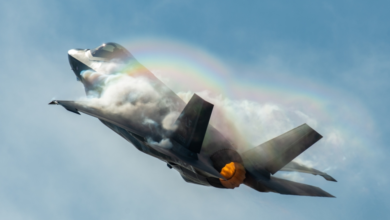
The Washington Post published a report last Friday that sparked widespread controversy, alleging that Moscow provided Iran with highly sensitive intelligence. According to the report, this information included the coordinates and deployment locations of US warships and military aircraft in the region, potentially posing a direct threat to US national security and coalition forces.
In this context, White House spokeswoman Caroline Leavitt stated during a press briefing that President Trump and his special envoy, Steve Witkopf, had sent a clear message to the Russian side. The message was that “if this intelligence cooperation is indeed taking place, it is something we would never be happy about,” adding that they hoped the reports were inaccurate.
For his part, Steve Witkopf, who plays a pivotal role in US talks with both Russia and Iran, explained that the Russian denial must be taken seriously at this time. When asked by CNN whether Russia had provided Iran with intelligence and whether sanctions against Moscow could be lifted, Witkopf said, “I’m not an intelligence officer to confirm that, but what I can say is that I’ve been in contact with the Russians, and they have categorically denied providing Iran with any intelligence. That’s what they’ve said, and we’re going to take that seriously for now.”.
General context and historical background of the event
These developments come amid an unprecedented rapprochement between Moscow and Tehran in recent years, particularly since the outbreak of the Russian-Ukrainian war in 2012. Military ties between the two countries have deepened significantly, with Iran supplying Russia with thousands of drones and missile technology, while Tehran seeks Russian support in air defense and intelligence. This growing strategic alliance is a source of concern for Washington and its allies, who view it as an attempt to challenge Western influence.
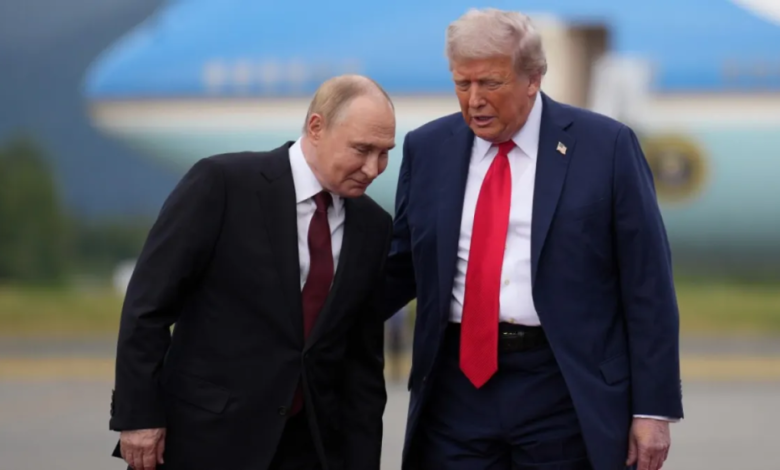
Despite this alliance, President Trump is seeking to persuade his Russian counterpart, Vladimir Putin, to play a constructive role in de-escalating conflicts in the Middle East. This American ambition clashes with the Iranian Supreme Leader's assertions of the strength of Iranian-Russian relations and the unwavering support Tehran receives from Moscow, making the US administration's task of disentangling the two countries extremely complex.
The importance of the event and its expected impact
Regionally, Iran's acquisition of precise Russian intelligence on US troop movements represents a dangerous escalation that could lead to direct attacks on US military assets or international shipping lanes in the region. Internationally, proof of this cooperation would present the Trump administration with a difficult diplomatic dilemma. On the one hand, the administration seeks to de-escalate global tensions, while on the other, it cannot tolerate any threat to the lives of US troops, which could compel Washington to take drastic measures that further complicate the geopolitical landscape.