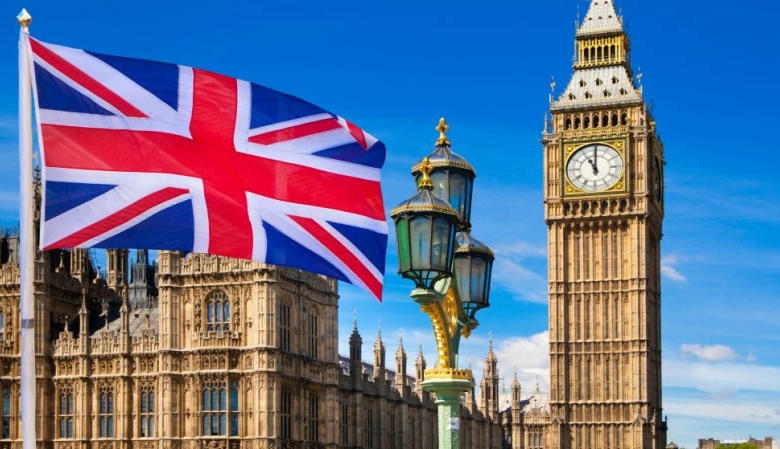
The United Kingdom faces a growing economic risk that could place it among the world's biggest losers from the fallout of the recent US Supreme Court ruling that struck down tariffs imposed by former President Donald Trump last year. This decision, which initially appeared to be a victory for free trade, has turned into a trade nightmare for London, which has lost its exclusive competitive advantage of lower tariffs than its competitors.
Trump's pledges and the erosion of the British advantage
The matter didn't end with the court ruling; the situation worsened with Trump's immediate pledge to reinstate a sweeping 15% global tariff on all trading partners without exception. This move effectively eliminates the trade advantage London previously enjoyed at the 10% level, leading to a real and tangible increase in the cost of British exports to the US market, one of the most important consumer markets for British products.
Background to the legal battle in Washington
To understand the depth of the crisis, one must consider the legal and political context in Washington. The US Supreme Court issued a landmark ruling, 6-3, stating that the president does not have absolute authority to impose tariffs under the International Emergency Economic Powers Act of 1977. This law theoretically allowed the executive branch to act in the economic sphere without prior congressional approval during an economic emergency. However, the court found that Trump's use of this law destabilized global trade and exceeded his constitutional powers, necessitating judicial intervention to redefine the boundaries of power between the White House and Congress.
Redrawing the map of winners and losers
According to analysis by Global Trade Alert, this radical shift in customs policy will result in the UK experiencing the largest relative increase in tariffs, followed by Italy and Singapore, placing immense pressure on these countries' export sectors. Conversely, major emerging economies such as Brazil, China, and India are expected to be among the biggest beneficiaries of the tariff restructuring, as their products will now have a level playing field with those of countries that previously enjoyed preferential treatment.
China and the search for sustainable balance
In a related context, Anthony Sassin, CEO of a specialized investment firm, commented, "China directly benefits from the Supreme Court's decision to overturn the selective tariffs imposed by Trump." He further explained Beijing's strategic vision: "In the long term, Beijing continues to seek to rebalance its exports and domestic consumption to achieve more sustainable growth, and this decision provides it with some breathing room in its trade war.".
The future of global trade amid escalation
Trump's response to the court ruling was swift. He announced an alternative plan to impose new global tariffs, starting at 10% on imports under a different legal authority, before raising the threat to 15%. This escalation suggests the global economy is entering a period of uncertainty, as these protectionist policies could lead to a new wave of inflation and disruptions to supply chains. The British economy remains at the center of the storm, struggling to adapt to a new reality in which its historical advantages have diminished.