
UN warns of dangerous escalation in the Middle East
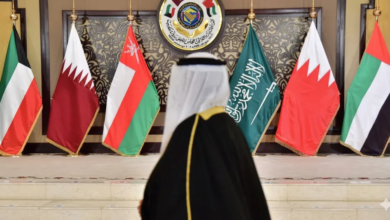
In a dangerous escalation reflecting the growing tensions in the Middle East, the UN High Commissioner for Human Rights, Volker Türk, issued a stark warning about the catastrophic consequences of recent military operations. During an urgent debate before the Human Rights Council, Türk asserted that Iran's attacks targeting Gulf Cooperation Council (GCC) states and the Hashemite Kingdom of Jordan represent a serious escalation of the conflict, emphasizing that innocent civilians bear the brunt and pay the heaviest price for these ongoing conflicts.
Details of the targeting and its impact on civilians
The UN official explained in his statement that the missile and drone attacks launched by Tehran were not limited to military targets, but extended to populated residential areas and vital and strategic facilities in several Gulf countries and Jordan. These attacks resulted in civilian deaths and injuries, in addition to causing widespread material damage to essential infrastructure, including seaports, civilian airports, and other vital facilities such as power grids and water supplies, thus exacerbating the humanitarian crisis.
International law and concerns about war crimes
In a related context, Volker Türk called for an immediate and complete cessation of these military operations, delivering a firm message that the deliberate targeting of civilians and civilian infrastructure in the wake of Iranian attacks could constitute war crimes under international humanitarian law and the Geneva Conventions. The protection of civilians during armed conflict is a fundamental and non-negotiable principle, as international law imposes a strict obligation on all parties to avoid targeting civilian objects indispensable to the survival of the population.
The historical context of regional tensions
Historically, the Middle East has witnessed a series of complex geopolitical tensions in which Tehran has played a pivotal role. The increasing reliance on drone and ballistic missile technology as military tools in recent years has fundamentally altered the rules of engagement. These tactics have previously threatened the security and stability of neighboring states, prompting the international community to repeatedly call for respect for state sovereignty and good neighborly relations to prevent the region from sliding into a full-blown, uncontrollable regional war.
Global economic repercussions and the importance of the Strait of Hormuz
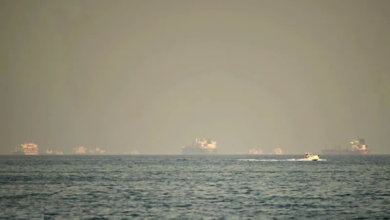
On the economic and international front, the United Nations' warnings extended beyond the humanitarian aspect to include serious global economic repercussions. Turk warned that the continued escalation and disruption of maritime traffic in the Strait of Hormuz would lead to devastating economic crises. It is worth noting that the Strait of Hormuz is one of the world's most strategically important waterways, through which approximately one-fifth of the world's crude oil consumption passes. Any threat to the security of navigation in this vital strait risks a sharp rise in global energy prices, which would negatively impact inflation rates and threaten the stability of the global economy.
The importance of urgent international action
In conclusion, the significance of this event lies in its role as a wake-up call to the entire international community. The anticipated impact of continued Iranian attacks extends beyond local and regional boundaries to the international arena, necessitating urgent diplomatic action from major powers and the UN Security Council to contain the situation. Establishing peace and stability in the Middle East is no longer merely a political option, but an imperative for ensuring global human and economic security.