Why is dawn delayed after the winter solstice despite the long daylight hours?

The head of the Jeddah Astronomical Society, Engineer Majid Abu Zahra, revealed the scientific explanation for an astronomical phenomenon that raises questions for many with the beginning of winter, related to the delay in the Fajr prayer and sunrise, despite the passing of the winter solstice and the gradual increase in day length.
The truth about the winter solstice and the change in day length
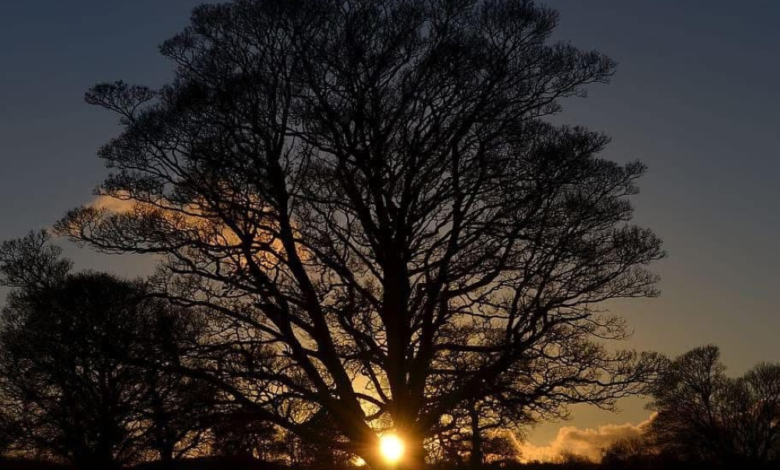
Abu Zahra explained that the winter solstice, which astronomically marks the shortest day and longest night of the year, is a turning point after which the days begin to gain additional minutes. However, the common belief that the increase in day length means an immediate advance in sunrise time is incorrect. In reality, the increase in daylight hours begins with a later sunset, while sunrise and dawn continue to be delayed for several days or even weeks after the solstice.
Physical explanation: The equation of time and the tilt of the Earth
Regarding the scientific reasons behind this phenomenon, Engineer Abu Zahra pointed to two main factors that govern the apparent movement of the Earth and the Sun:
- The tilt of the Earth's axis: The Earth's axis of rotation is tilted at an angle of about 23.5 degrees, which affects the angle of the sun's rays and the timing of sunrise and sunset.
- The Earth's elliptical orbit: The Earth's rotation around the sun does not occur in a perfectly circular path, but rather in an elliptical orbit, which causes the Earth's speed to change as it moves closer to and further from the sun.
These two factors combine to form what is known astronomically as the "equation of time," which causes the apparent solar time not to match the mechanical time of the clocks, resulting in a difference in the speed at which sunrise advances and sunset delays.
The effect of geographical location and latitude
An important scientific fact to understand in this context is that the impact of this phenomenon varies considerably depending on geographical location. Areas near the equator experience very slight, almost negligible, changes in sunrise and sunset times. Conversely, as we move north or south towards higher latitudes, the variation becomes more pronounced, and the period of delayed dawn after the winter solstice increases significantly.
Correcting common misconceptions about weather and astronomy
The head of the Jeddah Astronomical Society stressed the need to separate weather factors from astronomical calculations, emphasizing the following points:
- Atmospheric refraction: Although it makes us see the sun minutes before its actual rising, it is an almost constant effect and does not explain the increasing delay of dawn.
- Weather conditions: Clouds and fog only affect visual visibility and have no relation to the astronomical sunrise time.
- The movement of the moon: It is never taken into account in the calculations of Fajr or sunrise prayer times, as these times depend exclusively on the position of the sun relative to the earth.
Abu Zahra concluded his remarks by saying that the change in the first few days after the winter solstice is very slight (a few seconds or minutes), but it gradually accelerates, so that dawn comes forward again later and everyone feels a clear increase in daylight hours.