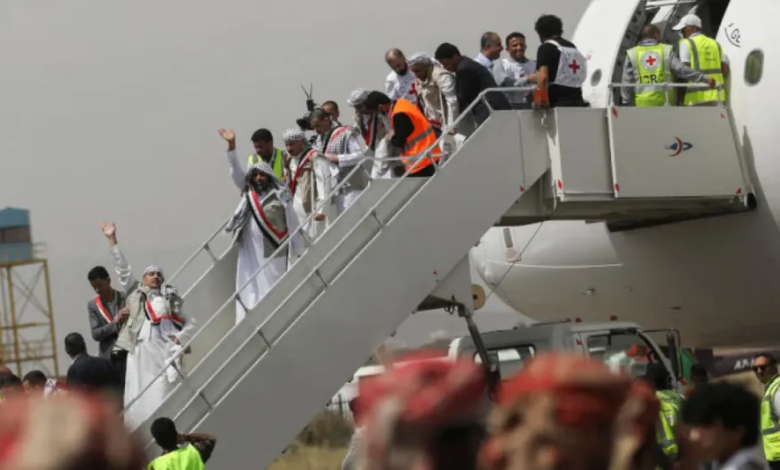
Agreement to exchange 2,900 prisoners in Yemen: Details of the humanitarian breakthrough

In a significant and promising development in the Yemeni crisis, the warring parties in Yemen have reached a preliminary agreement to exchange 2,900 detainees and prisoners from both sides, in what is considered one of the largest prisoner exchanges since the outbreak of the war. This agreement represents a new glimmer of hope for millions of Yemenis who are awaiting concrete steps towards ending the bloody conflict that has drained the country's resources for many years.
Details of the agreement and the context of the negotiations
This announcement came as the culmination of marathon rounds of negotiations sponsored by the United Nations, with logistical and technical support from the International Committee of the Red Cross. Reports indicate that the agreed-upon lists include prisoners of war, political detainees, and civilians held during the years of conflict. The issue of prisoners and detainees is considered one of the most complex and sensitive in the Yemeni context, viewed as a purely humanitarian matter that must be kept separate from the thorny political and military tracks.
Historical background of the conflict and the prisoners' file
The conflict in Yemen dates back to late 2014 and escalated with the intervention of the Arab Coalition in March 2015. Since then, the number of detainees held by the internationally recognized Yemeni government and the Houthi group (Ansar Allah) has grown significantly. The Stockholm Agreement, signed in December 2018, provided the initial framework for prisoner exchanges, stipulating a “all for all” exchange. However, its implementation faced numerous logistical and political obstacles, leading to the fragmentation of the agreement and its implementation in phases. The most notable of these was the large-scale exchange in October 2020, which involved more than 1,000 detainees.
The humanitarian and political importance of the agreement
This agreement is of paramount importance, extending far beyond the mere release of individuals; it represents a crucial step toward building trust between the warring parties. Observers believe that the successful completion of a deal of this magnitude (2,900 detainees) will pave the way for discussions on more complex issues, such as reopening blocked roads, unifying the central bank, and achieving a comprehensive ceasefire. On a humanitarian level, this agreement means ending the suffering of thousands of families who have waited years for their loved ones to return, thus alleviating some of the social and psychological trauma left by the war.
Regional and international impact
At both the regional and international levels, this progress is seen as evidence of the success of the diplomatic efforts led by the UN envoy to Yemen and the active role of influential regional states in the Yemeni conflict. The international community consistently affirms that a military solution in Yemen is impossible and that such humanitarian steps are the cornerstone of any future political settlement that guarantees stability in Yemen and security for the entire region.