Yemen is coordinating with Washington and London to support maritime security and combat terrorism

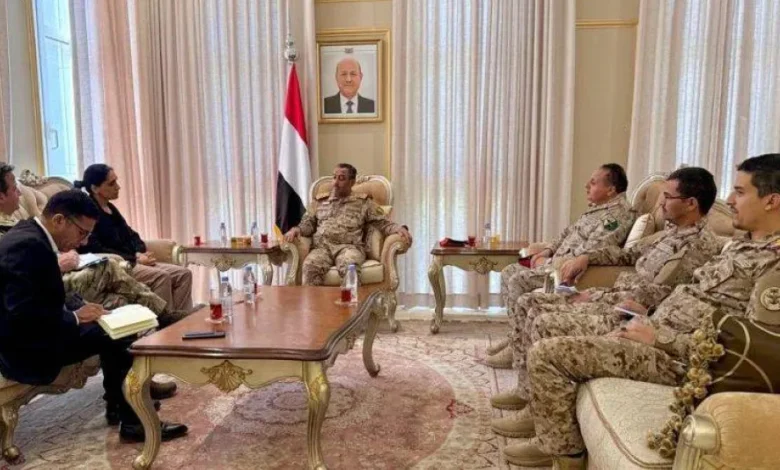
The internationally recognized Yemeni government has intensified its diplomatic and security efforts, announcing enhanced joint coordination with both the United States and the United Kingdom, with the aim of supporting maritime security and counter-terrorism efforts, in a move that comes in response to the growing challenges facing vital waterways in the region.
The importance of security coordination at the present time
This coordination comes at a highly sensitive time, as Yemen and the region face complex security challenges, particularly in the Red Sea and the Bab al-Mandab Strait, a vital artery for global trade. Through this partnership, the Yemeni government seeks to enhance the capabilities of its coast guard and security forces, enabling them to fulfill their duties in securing territorial waters and countering threats to international shipping lanes, whether stemming from piracy, attacks by the Houthi group, or the activities of terrorist organizations.
Background of the conflict and its impact on international navigation
Since the outbreak of war in Yemen, the country's western coast has become a flashpoint, particularly with the recent increase in Houthi attacks targeting commercial and oil tankers, a reaction to events in the Gaza Strip. These attacks have not only impacted local security but have also prompted extensive international intervention, including the formation of naval coalitions led by Washington and London to protect shipping. Observers believe that empowering the legitimate government to take the initiative in security matters on the ground is the best way to ensure long-term stability, rather than relying solely on foreign naval patrols.
Counterterrorism: Another front for cooperation
In addition to maritime security, the trilateral (Yemeni-American-British) coordination focuses on counterterrorism. Yemen continues to suffer from the presence of pockets of extremist organizations such as al-Qaeda in the Arabian Peninsula, which attempt to exploit the security vacuum in some areas. The anticipated Western support includes providing logistical training, intelligence sharing, and the necessary technical equipment to track and dismantle these cells, thus contributing to cutting off the sources of terrorism and preventing its use of Yemeni territory as a launching pad for operations that threaten regional and international security.
Strategic and economic dimensions
This cooperation has dimensions that extend beyond the military sphere; the stability of navigation in the Red Sea directly impacts Yemen's struggling economy, as the country relies almost entirely on imports through its ports. Securing these waterways also ensures the uninterrupted flow of energy supplies and global trade, making Yemen's stability a pressing international interest. These actions underscore the international community's commitment to supporting the Presidential Leadership Council in Yemen in restoring state institutions and establishing the rule of law throughout the country's territory and territorial waters.