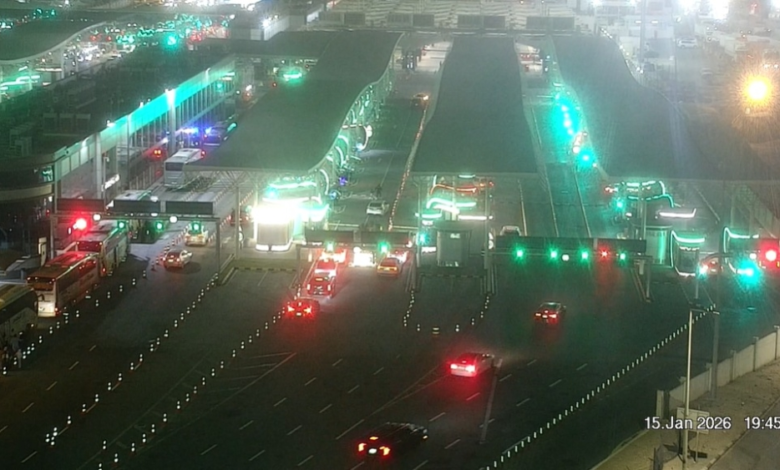
King Fahd Causeway traffic congestion: 69 minutes to cross and traffic details

The King Fahd Causeway, the vital link between Saudi Arabia and Bahrain, experienced heavy traffic and severe congestion, with measurements indicating an estimated crossing time of 69 minutes for completing procedures and traveling towards Bahrain. This congestion coincides with peak hours, particularly during weekends and tourist seasons, prompting thousands of travelers to use this important land crossing.
This traffic congestion is a common occurrence at certain times due to the high volume of travel between the two brotherly countries, whether for tourism, leisure, family visits, or trade. The relevant authorities at the King Fahd Causeway Authority, in cooperation with passport and customs officials on both sides, are working at full capacity to facilitate the flow of traffic and minimize waiting times as much as possible by opening additional lanes and utilizing modern technologies to expedite procedures.
Historical background and strategic importance
The King Fahd Causeway is more than just a highway over water; it is a symbol of the strong fraternal ties between Saudi Arabia and Bahrain. Officially opened in 1986, the bridge is approximately 25 kilometers long, making it one of the longest bridges in the world and the only land link connecting Bahrain to the outside world. Since its construction, this monumental project has revolutionized transportation, with hundreds of millions of travelers and vehicles crossing it over the past decades.
Economic and social impact
The King Fahd Causeway's importance extends beyond its social and touristic aspects; it serves as a vital economic artery, injecting life into the economies of both countries. The bridge facilitates the movement of trucks and goods, boosting trade and stimulating markets in Saudi Arabia's Eastern Province and Manama, Bahrain. Furthermore, the bridge is a major supporter of Bahrain's tourism sector, as visitors from Saudi Arabia constitute the largest percentage of tourists in Bahrain, positively impacting hotels, shopping centers, and restaurants.
Traveler tips
Given the recurring traffic congestion, experts and authorities advise travelers to plan their trips in advance and use available smart applications that provide real-time updates on traffic conditions and expected travel times. It is also recommended to avoid peak hours and try to travel in the early morning or midweek for a smoother and more comfortable journey.