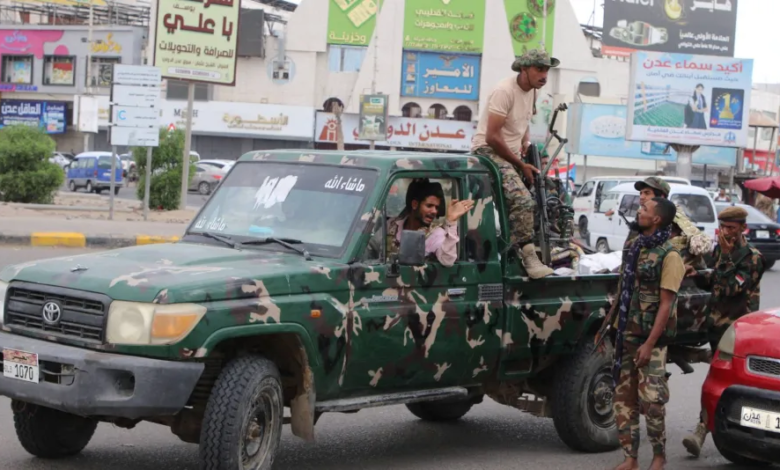
Curfew imposed in Aden and weapons banned by order of Al-Mahrami: Full details

Abdul Rahman Al-Mahrami (Abu Zara’a), a member of the Presidential Leadership Council in Yemen, issued strict security directives imposing a comprehensive night curfew in the interim capital, Aden, in conjunction with a complete suspension of the movement of weapons within the city, in a step aimed at restoring order to the security scene and imposing the prestige of the state.
These directives come as part of a package of urgent measures necessitated by the security need to control the streets of Aden. Al-Mahrami stressed the need for all security and military units to immediately implement these orders, and to prevent unauthorized military personnel from roaming or carrying weapons in public places and markets, in order to ensure the peace of citizens and reduce the armed displays that have plagued the city for long periods.
Security context and historical challenges
To understand the significance of this decision, one must consider the broader context of Aden since its liberation from the Houthi militia in 2015. Over the past years, the interim capital has faced complex security challenges, including the proliferation of unregulated weapons and the multiplicity of armed groups, which have frequently led to internal clashes and security incidents that have negatively impacted civilian life. The Yemeni government and the Presidential Leadership Council have repeatedly sought to unify security and military decision-making under the Riyadh Agreement, and Al-Mahrami's recent actions represent a practical implementation of these efforts to end the security duality.
The importance of the decision and its expected effects
The decision to impose a curfew and prohibit the movement of weapons acquires strategic importance that goes beyond the direct security dimension to include economic, social and political dimensions:
- On the local level: The decision is expected to contribute to reducing crime rates and curbing the phenomenon of revenge and assassinations fueled by the chaos of weapons, thus enhancing the citizen's sense of security and restoring normal life to the streets of Aden, day and night.
- On the economic front: Security stability is the cornerstone of any economic recovery. Establishing security in Aden would encourage the return of local capital and provide a safe environment for traders and investors, which could positively impact the stability of the local currency and improve basic services that have been damaged by the chaos.
- On the political level: These decisions demonstrate the seriousness of the Presidential Leadership Council in assuming its responsibilities, and enhance the confidence of the international and regional community in the Council’s ability to manage the liberated areas, thus supporting the government’s position in any future peace negotiations.
In conclusion, Al-Mahrami’s orders represent a real test of the security services’ ability to enforce the law, and a pivotal step towards transforming Aden into a model of a safe and stable city befitting its status as the country’s temporary capital, amid widespread public anticipation of the results of this security campaign on the ground.