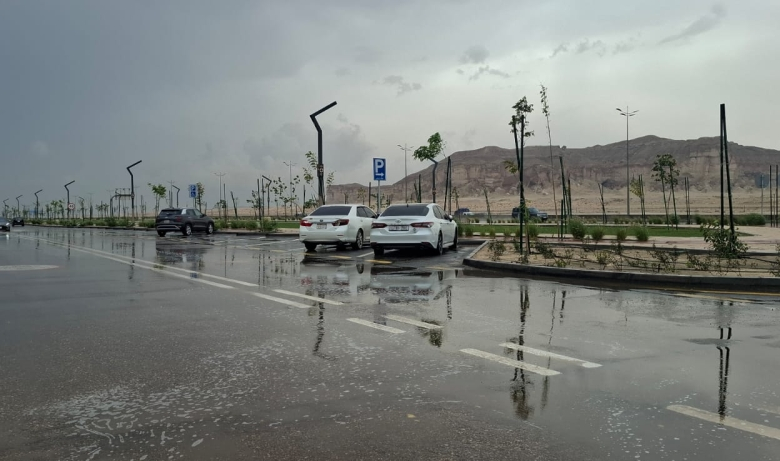

Al-Ahsa Governorate in the Eastern Province of Saudi Arabia is experiencing significant weather fluctuations, with moderate to heavy rainfall across large parts of the region. In a swift response to these weather developments, the National Center for Meteorology raised its alert level to "red alert" on Tuesday, warning of the continuation of this severe weather and its potential impact on daily life.
Details of the red alert in Al-Ahsa and Abqaiq
The National Center for Meteorology issued an urgent statement indicating that heavy rainfall with severe impacts is expected in the Al-Ahsa and Buqayq governorates. This warning remains in effect until 11:00 PM, necessitating the utmost caution. This developing weather system is accompanied by strong downdrafts, leading to dust storms and a complete lack of horizontal visibility on highways and public squares, posing a serious risk to traffic.
Effects associated with the rainy weather
The field alert issued by the relevant authorities indicated a high probability of hail showers and flash floods in valleys and ravines. These phenomena coincide with severe thunderstorms expected to strike large parts of the two governorates throughout the alert period. Weather maps and satellite images indicate that these severe fluctuations will continue until late at night, prompting a full mobilization of relevant authorities, including Civil Defense, Traffic Police, and the Al-Ahsa Municipality, to respond immediately to any field emergencies resulting from this heavy rainfall and to manage water accumulations.
The climatic and historical context of rainfall in the Eastern Province
Historically, Al-Ahsa Governorate, home to the world's largest palm oasis and a UNESCO World Heritage Site, has benefited agriculturally from the rainy season to replenish its groundwater reserves. However, global and regional climate changes have led to more frequent and sometimes extreme rainfall. The Eastern Province's climate is characterized by rapid fluctuations, particularly during seasonal transitions, when warm, humid air masses from the Arabian Gulf meet cold low-pressure systems, generating dense cumulonimbus clouds that produce intermittent rain or sudden, heavy downpours.
The importance of early warnings and their local impact
Early warnings issued by the National Center for Meteorology play a vital role in protecting lives and property. At the local level, these alerts guide government and private entities in activating proactive emergency plans. These measures also reflect the significant advancements in the Kingdom of Saudi Arabia's meteorological monitoring system, which utilizes state-of-the-art radar technologies to provide accurate and real-time readings. This enhances the quality of life and ensures a safe environment for citizens and residents, aligning with the Kingdom's Vision 2030 objectives for crisis and disaster management.
Safety guidelines for citizens and residents
In light of these exceptional weather conditions, the General Directorate of Civil Defense and relevant authorities called on all passers-by and residents to strictly adhere to the following instructions to ensure their safety:
- Take maximum precautions while driving and avoid excessive speed to prevent skidding.
- Strict adherence to traffic safety instructions, especially when horizontal visibility is nonexistent.
- Staying away completely from flood channels, valleys, and water pools that may pose a hidden danger.
- Avoid taking shelter behind billboards or trees during thunderstorms and high winds.
- Follow the continuous updates issued by the National Center for Meteorology through official channels and social media accounts.