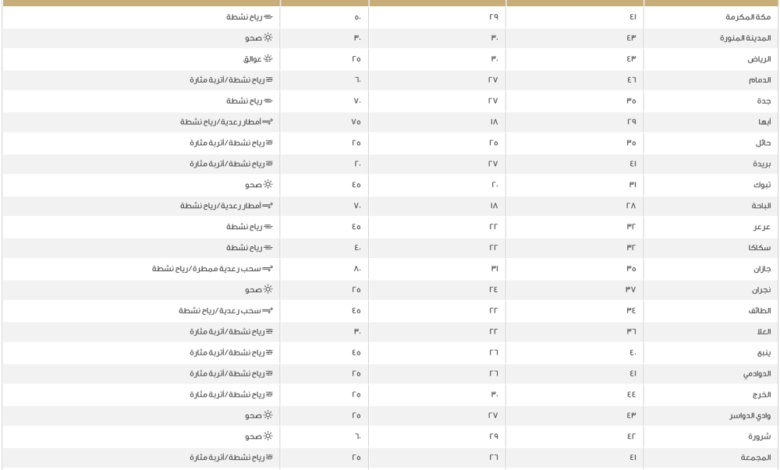

أصدر المركز الوطني للأرصاد في المملكة العربية السعودية بياناً مفصلاً حول درجات الحرارة العظمى المسجلة يوم السبت، كاشفاً عن موجة حر شديدة تؤثر على مناطق واسعة من البلاد. وتصدرت محافظة الأحساء قائمة المدن الأعلى حرارة، إلى جانب ثلاث مناطق أخرى، حيث بلغت درجة الحرارة فيها 48 درجة مئوية، مما يعكس قسوة الظروف الجوية التي تشهدها المنطقة الشرقية وأجزاء أخرى من المملكة خلال فصل الصيف.
ووفقاً لتقرير المركز، فإن المناطق الأربع التي سجلت 48 درجة مئوية هي: الأحساء، روضة التنهات، صحراء الدهناء، والصمان. وتأتي مدينة الدمام في المرتبة التالية مباشرة بدرجة حرارة بلغت 46 درجة مئوية، مما يؤكد أن المنطقة الشرقية هي بؤرة هذه الموجة الحارة. كما شهدت مدن رئيسية أخرى ارتفاعاً ملحوظاً في درجات الحرارة، حيث سجلت كل من الرياض والمدينة المنورة 43 درجة مئوية، بينما وصلت الحرارة في مكة المكرمة والمشاعر المقدسة (منى ومزدلفة) إلى 41 درجة مئوية، وفي عرفات إلى 42 درجة مئوية، وهو ما يمثل تحدياً كبيراً خاصة مع توافد حجاج بيت الله الحرام.
السياق المناخي لارتفاع درجات الحرارة في المملكة
يأتي هذا الارتفاع الكبير في درجات الحرارة ضمن السياق المناخي الطبيعي للمملكة العربية السعودية، التي تتميز بمناخ صحراوي حار وجاف في معظم مناطقها. ويعتبر فصل الصيف، الممتد من يونيو إلى أغسطس، ذروة الموسم الحار سنوياً. وتتأثر المملكة بكتل هوائية حارة قادمة من شبه القارة الهندية ومنخفضات حرارية تتمركز فوق شبه الجزيرة العربية، مما يؤدي إلى تسجيل درجات حرارة قياسية تتجاوز في كثير من الأحيان 45 درجة مئوية، خاصة في المناطق الداخلية والصحراوية مثل الربع الخالي والدهناء. وعلى الصعيد العالمي، يشير الخبراء إلى أن ظاهرة التغير المناخي تساهم في زيادة وتيرة وشدة موجات الحر، مما يجعل مثل هذه الأرقام أكثر تكراراً في المستقبل.
التأثيرات المتوقعة والإجراءات الوقائية
لهذه الموجة الحارة تأثيرات مباشرة على مختلف جوانب الحياة. على الصعيد الصحي، تزداد مخاطر الإصابة بالإجهاد الحراري وضربات الشمس، مما يستدعي إصدار تحذيرات مستمرة من قبل الجهات الصحية والدفاع المدني، التي تنصح المواطنين والمقيمين بتجنب التعرض المباشر لأشعة الشمس خلال ساعات الذروة (من 11 صباحاً إلى 4 مساءً)، والإكثار من شرب السوائل، ومراقبة صحة كبار السن والأطفال. اقتصادياً، يؤدي ارتفاع الحرارة إلى زيادة هائلة في استهلاك الطاقة الكهربائية لتشغيل أجهزة التكييف، مما يضع ضغطاً كبيراً على شبكة الكهرباء. كما تتأثر قطاعات مثل الإنشاءات والزراعة، حيث يتم تعديل ساعات العمل لحماية العمال في الهواء الطلق. ومع تزامن هذه الموجة مع موسم الحج، ترفع السلطات السعودية درجة استعدادها لضمان سلامة وراحة ضيوف الرحمن عبر توفير كافة الإمكانيات من مرافق تبريد ونقاط مياه وخدمات طبية متنقلة للتعامل مع أي طارئ.
وفيما يلي قائمة بدرجات الحرارة المسجلة في بعض المدن الأخرى:
- الخرج: 44 درجة مئوية.
- وادي الدواسر: 43 درجة مئوية.
- شرورة: 42 درجة مئوية.
- بريدة والمجمعة والدوادمي: 41 درجة مئوية.
- ينبع وحفر الباطن: 40 درجة مئوية.
- جدة والعلا: 36 درجة مئوية.
- جازان وحائل ورفحاء: 35 درجة مئوية.
- الطائف: 34 درجة مئوية.
- أبها: 29 درجة مئوية.
- الباحة وطريف: 28 درجة مئوية.
- السودة: 23 درجة مئوية.