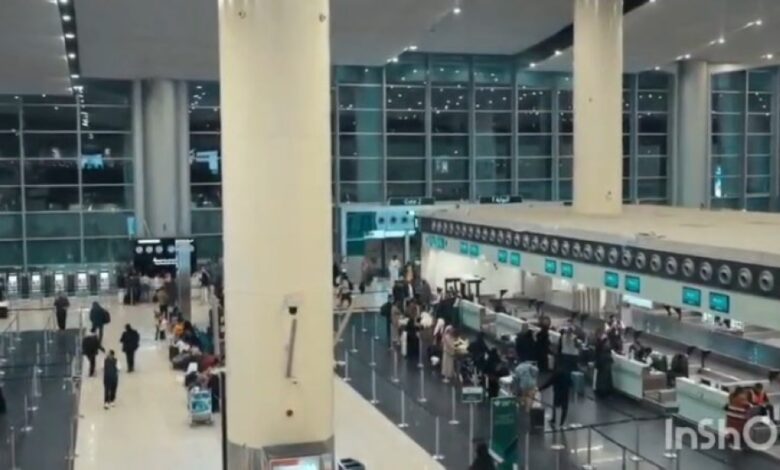
Smooth flow of travel at King Khalid International Airport after resumption of operations

has announced King Khalid International Airport that operations have returned to normal, with the airport terminals experiencing a high flow of passengers and the completion of procedures, after all necessary arrangements were completed to ensure flights proceed according to the specified schedules.
Inspection tour by the Minister of Transport and Logistics
As part of ongoing field monitoring, His Excellency the Minister of Transport and Logistics and Chairman of the Board of Directors of the General Authority of Civil Aviation, Engineer Saleh bin Nasser Al-Jasser, conducted a comprehensive inspection visit to the airport facilities. His Excellency directly observed the operational processes, inspecting the smooth flow of passenger traffic in the various terminals and the mechanisms in place to serve travelers.
During the visit, Al-Jasser listened at the operations center to a detailed technical presentation given by the CEO of Airports Holding Company, which addressed current performance indicators, flight punctuality rates, and approved operational plans to deal with air traffic density.
Instructions for implementing the Passenger Protection Regulations
The Minister of Transport directed that efforts be intensified to enhance performance efficiency and improve the passenger experience, emphasizing the importance of adhering to the highest standards of quality and safety. He also stressed the strict application of the "Passenger Protection Regulations," which guarantee passenger rights and provide them with necessary care in all circumstances, and directed that periodic reviews of procedures be conducted to ensure the sustainability of operational discipline.
King Khalid Airport: The gateway to the capital and a strategic logistics hub
King Khalid International Airport occupies a pivotal position as a major gateway to the Kingdom of Saudi Arabia, playing a key role in achieving the goals of Saudi Vision 2030 , which aims to transform the Kingdom into a global logistics hub connecting three continents. The airport is undergoing continuous development of its infrastructure and digital services to accommodate the increasing number of passengers, particularly with the events and tourist seasons taking place in Riyadh.
The importance of the aviation sector in the national strategy
This close monitoring by transport sector leaders underscores the paramount importance the Kingdom places on the civil aviation sector. The National Transport and Logistics Strategy aims to increase the capacity of Saudi airports to more than 330 million passengers annually by 2030, in addition to expanding international destinations, thereby strengthening the Kingdom's position as a leading regional and international tourism and trade hub. Ensuring smooth traffic flow at major airports such as King Khalid International Airport is a cornerstone of this strategy's success and of gaining the trust of both international and domestic travelers.