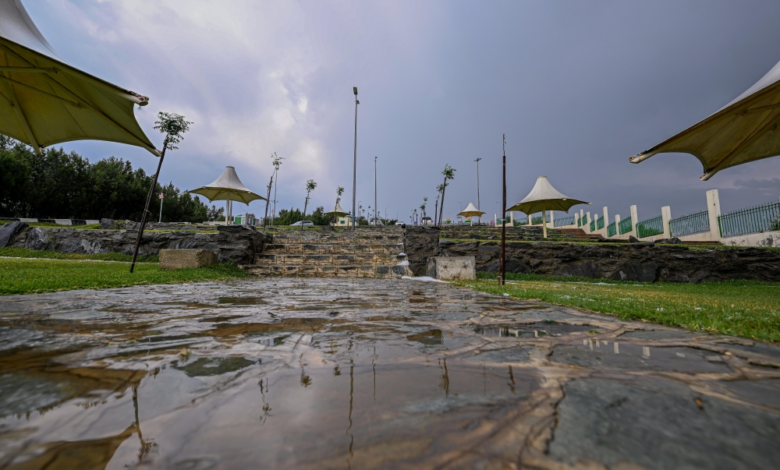
Today's weather in Al-Baha: Scattered rain and dense fog reducing visibility

The Al-Baha region experienced noticeable weather fluctuations today, including scattered rainfall ranging from moderate to light, accompanied by dense fog that led to near-zero horizontal visibility, particularly in the Sarawat Mountains and higher elevations. This weather pattern is part of the typical climatic changes the region experiences during this time of year.
Regions and governorates affected by the rainy weather
Rainfall covered wide and scattered areas of Al-Baha city and its suburbs, extending to several vital governorates in the region. The heaviest rain and fog were concentrated in the governorates of Bani Hassan, Al-Qura, Al-Mandaq, Qalwa, and Ghamid Al-Zanad, as well as their affiliated centers. Rain clouds and dense fog blanketed many of the region's renowned natural parks, creating a unique and beautiful landscape. The rain caused several valleys and streams to flow, and the land was saturated, promising a prosperous agricultural and natural season.
The geographical and climatic context of the Al-Baha region
The Al-Baha region, situated in the Sarawat Mountains of southwestern Saudi Arabia, boasts an exceptional climate. Thanks to its high altitude, the region enjoys mild summers and cool, rainy winters. This mountainous terrain plays a key role in the formation of dense fog, as low-lying clouds touch the mountain peaks, creating breathtaking natural scenery that makes Al-Baha a leading tourist destination both locally and regionally.
Local and regional impact of rain and fog
Locally, these rains contribute significantly to supporting the agricultural sector, on which a large segment of the Al-Baha population depends. The agricultural terraces for which the region is famous, producing diverse crops such as pomegranates, grapes, and almonds, rely primarily on rainwater. Furthermore, the flow of wadis contributes to replenishing groundwater and enhancing vegetation cover.
On a regional and tourism level, this rainy and foggy weather plays a pivotal role in boosting domestic tourism. Visitors flock from across the Kingdom and the Gulf countries to enjoy the cool weather and stunning scenery, escaping the high temperatures of the desert and coastal regions. This influx of tourists has a positive impact on the local economy and supports the accommodation and hospitality sectors.
Safety guidelines and official warnings
As this weather pattern persists, relevant authorities, such as the General Directorate of Civil Defense and the National Center for Meteorology, consistently emphasize the need for caution. Drivers are advised to exercise extreme caution while driving on mountain roads and curves due to reduced visibility caused by dense fog and the risk of skidding due to rain. Warnings are also continuously issued to avoid approaching valleys and floodplains during and after rainfall to ensure the safety of lives and property.