
Climate challenges face the AFC Champions League quarter-finals
Asian football fans are eagerly anticipating the quarter-final matches of the 2025-2026 AFC Champions League, with crucial encounters between Saudi Arabia's Al-Ahli and Malaysia's Johor Darul Ta'zim, and Saudi Arabia's Al-Ittihad against Japan's Machida. As excitement builds, however, weather challenges are emerging that could alter the course of the matches, as the region experiences unstable weather conditions accompanied by dust storms and heavy sandstorms.
Historical context and the impact of weather on continental championships
Historically, climatic factors have always played a crucial role in continental championships, particularly in the Middle East and the Arabian Gulf region, which occasionally experiences sandstorms that disrupt match schedules. These matches are of paramount importance both regionally and internationally, as they determine which teams advance to the later stages of the revamped Asian Championship. This places the players' physical and technical readiness under intense scrutiny and underscores the responsibility of organizing committees to ensure everyone's safety.
The impact of dust on players: reduced technical and physical performance
In this context, Dr. Khaled Obaid Bawaked, a consultant in family, community, and allergy medicine, issued important warnings through the Okaz newspaper, emphasizing that the impact of dust on players is not limited to the technical aspect but extends to public health. He explained that if the dust becomes heavy, postponing matches becomes a strong possibility to protect the sporting system. However, if the dust persists at a light level, it inevitably leads to a decrease in horizontal visibility on the field, negatively affecting the accuracy of passes, the speed of decision-making, and increasing the rate of individual errors.
Physiologically, inhaling dust irritates the respiratory system, reducing oxygen absorption efficiency, which directly impacts players' physical fitness and endurance throughout a match. Dr. Bawaked also pointed to other symptoms such as dry eyes and blurred vision, as well as a general feeling of fatigue resulting from inhaling air laden with fine particles. This situation places a heightened responsibility on club technical and medical staff to monitor players' health, ensure adequate rest periods, and emphasize increased water intake to guarantee continuous hydration.
Strict preventive guidelines for the public and asthma patients
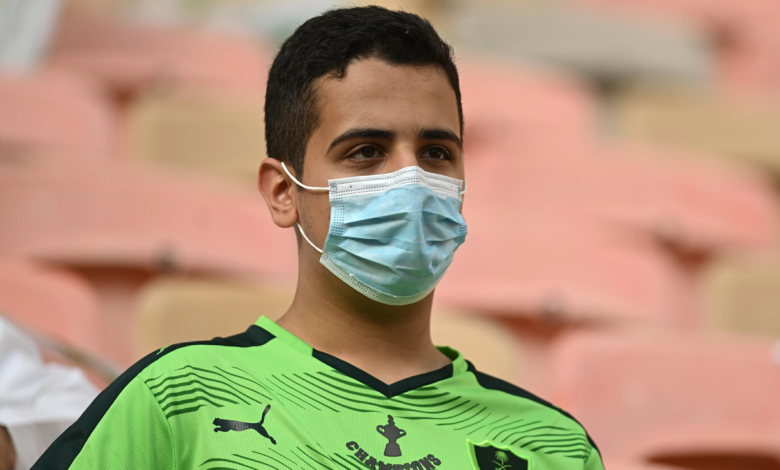
Regarding the fans flocking to the stands to support their teams, the medical consultant issued a strong warning, particularly for asthma sufferers, the elderly, and children. He stressed the necessity of taking a series of strict preventative measures, primarily wearing medical masks to filter the inhaled air and avoiding prolonged periods outdoors before kickoff. He also emphasized the importance of asthma sufferers using their preventative inhalers before going to the stadiums, carrying emergency medications in case of any respiratory emergency, and seeking immediate medical attention at the nearest medical facility should they experience any symptoms.
Safety first in sports competitions
In conclusion, Dr. Bawaked emphasized that health awareness and adherence to preventive measures are the first line of defense against these weather fluctuations. The enjoyment of football and the competitive spirit of major tournaments like the AFC Champions League should never overshadow the safety and health of players and fans. Proactive measures are the only way to ensure this Asian football extravaganza concludes safely without any significant health complications.