
The National Center for Meteorology in Saudi Arabia issued a recent report indicating that light to moderate rain is expected in the Riyadh region over the next few hours, continuing until tomorrow. This forecast is part of ongoing monitoring of weather conditions and atmospheric fluctuations in the region during this time of year.
The center explained in its detailed statement that the rainfall will not be limited to the capital, Riyadh, but will extend to a large number of governorates and centers within the region. The list includes: Diriyah, Dhurma, Al-Hariq, Al-Muzahmiyah, Al-Dilam, Hawtat Bani Tamim, and Al-Kharj. The forecast also extends to the governorates of Afif, Al-Dawadmi, Rumah, Al-Quway'iyah, Al-Rayn, Marat, Huraymila, as well as Al-Aflaj, As-Sulayyil, and Wadi Ad-Dawasir, necessitating caution in these vast areas.
Civil Defense warnings and safety guidelines
In conjunction with the weather report, the General Directorate of Civil Defense urged all citizens and residents to exercise caution. Civil Defense emphasized the importance of adhering to public safety guidelines, including staying away from valleys and flood channels, not attempting to cross valleys while they are flowing, and avoiding low-lying areas and water accumulations that could pose a risk to life and property.
The context of the weather situation and its importance
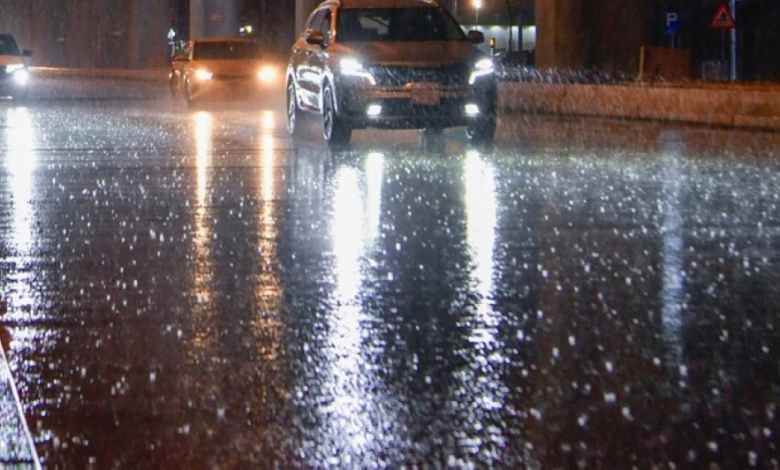
These forecasts are particularly important given the geographical and climatic characteristics of the Riyadh region. At this time of year, central Saudi Arabia experiences fluctuating weather patterns, characterized by active surface winds that sometimes stir up dust and sand, followed by periods of varying intensity. These rains, known locally as "rains of goodness," are vital to the desert environment, contributing to the irrigation of vegetation and the replenishment of groundwater. However, they also necessitate public awareness regarding potential side effects such as vehicle skidding or reduced horizontal visibility.
These weather conditions typically affect traffic within major cities and on highways connecting provinces, requiring drivers to exercise caution and maintain safe distances. Relevant authorities, including meteorologists, civil defense, and traffic police, are working in close coordination to ensure everyone's safety and to disseminate accurate information promptly through official channels.
We ask God to make it rain blessings and goodness, and to spread its benefits throughout the country, while continuously emphasizing the need to follow current weather reports through official media and approved smartphone applications.