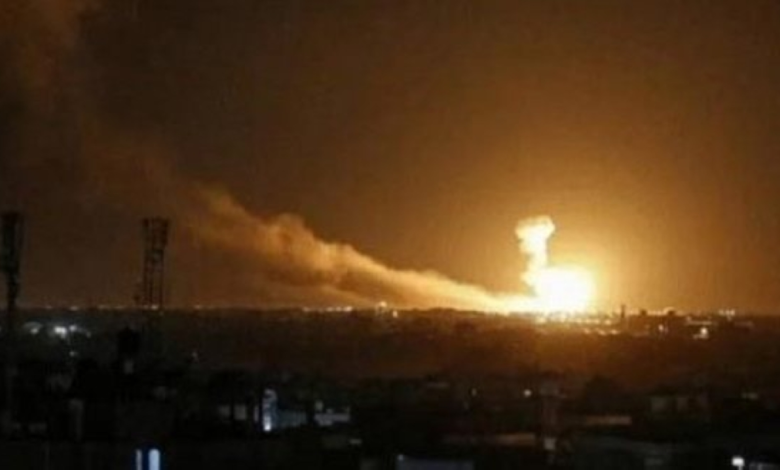

Iranian state media and international news sources reported that, in a significant development in the ongoing conflict, intensive airstrikes targeted a strategic military base in the city of Isfahan, according to a breaking news report by Al Arabiya. This attack comes as part of an escalating series of military operations in the region, indicating a qualitative shift in the list of military targets deep inside Iran.
Explosions rock the capital, Tehran
Simultaneously with the events in Isfahan, two powerful explosions rocked eastern Tehran this afternoon, sending a massive plume of black smoke into the sky over the city's eastern districts. The Iranian capital has been subjected to regular and systematic bombardment since the start of the US and Israeli military operations last Saturday, in what has become known in the media as the "Iran War," aimed at neutralizing the Iranian regime's military capabilities.
The strategic importance of Isfahan and the impact of the attacks
The city of Isfahan holds paramount strategic and military importance in Iran's defense map. It is not merely a historical city, but a vital center for military and defense industries, housing major air bases as well as sensitive facilities linked to the nuclear and missile programs. Targeting a military base in this specific location carries profound implications, indicating the attacking forces' ability to penetrate air defenses and reach critical strongholds in the heart of the country, thereby weakening supply, command, and control lines.
Naval losses and a decline in missile capabilities
In a related development concerning naval operations, the United States a major military success, claiming to have sunk more than 30 Iranian warships since the start of the current conflict. This development represents a significant blow to the Iranian navy in the Gulf, diminishing its ability to maneuver or threaten international shipping lanes.
On the military front, a noticeable decrease has been observed in the frequency of attacks launched by Tehran using ballistic missiles and drones. Military observers believe this significant decline reflects the success of preemptive and defensive strikes in depleting Iran's strategic stockpiles or disabling launch sites and command centers, thus shifting the balance of power in this ongoing confrontation.
Repercussions of the regional landscape
These developments cast a long shadow over the regional and international landscape, as the world awaits the outcome of this war and its impact on energy security and the stability of the Middle East. The combination of targeting deep-land bases, crippling naval capabilities, and neutralizing missile power points to a comprehensive strategy aimed at drastically reducing Iranian military influence in record time.