
Diplomatic efforts to broker a "Gaza agreement" and end the ongoing war face fundamental and complex challenges, primarily centered on two contentious issues: the demand for Hamas's disarmament and the guarantees required to launch a reconstruction plan. These developments are unfolding amidst intensive regional and international efforts to bridge the gap between the two sides, amid fears of continued political deadlock and a worsening humanitarian crisis.
The disarmament dilemma and the Israeli position
The issue of disarmament constitutes the major obstacle to any potential political settlement. From the Israeli perspective, the disarmament of the Gaza Strip and the dismantling of the military capabilities of Palestinian factions, particularly Hamas, are considered essential conditions for any agreement that would end military operations and allow for the return of displaced persons. Tel Aviv views the continued presence of these weapons as an existential threat to the security of the Gaza periphery settlements, thus compelling it to insist on maintaining a certain level of security control or demanding strict international guarantees.
In contrast, the Palestinian factions view their weapons as their only source of strength and the guarantor against the recurrence of incursions, rejecting any proposal that includes handing over weapons as part of an exchange deal or truce, which puts the negotiations at a dead end that requires creative formulas for a solution.
Reconstruction plan: Conditional financing
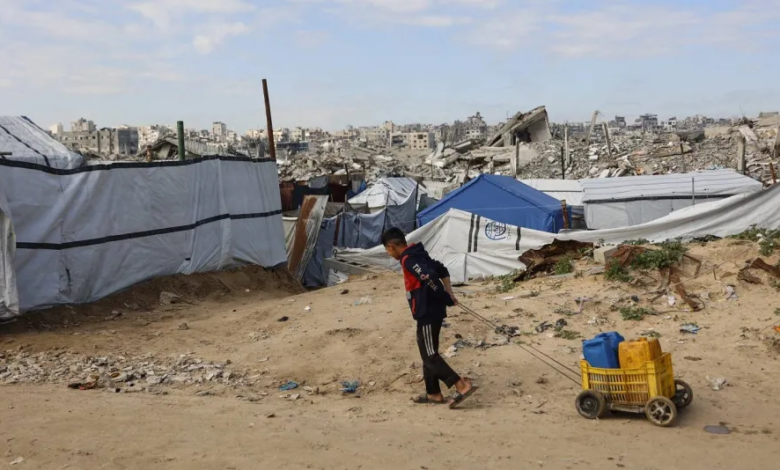
On the other hand, the issue of reconstruction stands as a major point of pressure. The war left unprecedented destruction of infrastructure, housing, and vital facilities in the Gaza Strip, requiring massive budgets estimated at tens of billions of dollars. International reports indicate that the reconstruction process could take many years, perhaps even decades, for Gaza to return to its former state.
Donor countries, both Arab and European, link their contributions to the reconstruction fund to the existence of a clear and sustainable political horizon. They are no longer willing to finance the rebuilding of what might be destroyed again in a future round of conflict; therefore, understandings regarding the "day after" the war, and who will manage the sector both civilianly and in terms of security, are prerequisites for the disbursement of funds.
Regional and international context
Historically, the Gaza Strip has witnessed several rounds of escalation and war (2008, 2012, 2014, 2021), which usually ended with a temporary ceasefire and limited reconstruction mechanisms such as the "Robert Serry Mechanism." However, the current situation is radically different due to the scale of the destruction and the geopolitical changes in the region.
The Egyptian-Qatari-American mediation plays a pivotal role in attempting to resolve this impasse by proposing a multi-stage plan, beginning with a ceasefire and prisoner exchange, and culminating in discussions of the contentious issues. The international community recognizes that failure to reach agreements on weapons and reconstruction could plunge the region into widespread chaos or a wider regional war, making a "Gaza agreement" an urgent necessity for regional security and peace.