Gold price volatility: Reasons for the decline and expert predictions for the future

Introduction to gold price fluctuations
Global financial markets have recently been experiencing heightened anticipation following significant shifts in precious metals trading. At the forefront of this trend has been volatility of gold prices , with traders and investors navigating a period of intense downward pressure followed by rapid corrections, leaving markets in a state of constant uncertainty.
The historical context of gold as a safe haven
Historically, gold has long been considered the primary safe haven for investors during times of economic crisis and political turmoil. Over the decades, the precious metal has exhibited an inverse relationship with interest rates and the strength of the US dollar. When interest rates rise, investors tend to favor fixed-income assets, putting downward pressure on gold. However, central banks worldwide continue to play a crucial role by accumulating gold reserves to diversify their portfolios and reduce reliance on fiat currencies, thus providing long-term structural support for the metal's price.
Details of the recent decline and correction
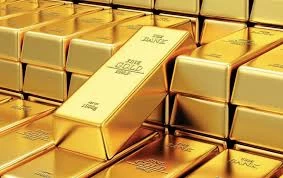
In light of recent events, gold prices suffered consecutive losses for nine straight trading sessions. This decline officially pushed the metal into bear market territory. After reaching unprecedented historical highs, touching the $5,554 mark, the markets were hit by a sharp drop, sending prices plummeting to $4,100. However, the markets quickly recovered, with gold paring its losses in two consecutive sessions and correcting its course upwards to reach $4,441.03 per ounce.
Long-term outlook for the yellow metal
Despite this sharp decline, which has worried some traders, financial analysts remain optimistic about the long-term outlook. Estimates suggest that prices are heading towards new record highs. Although some institutions have lowered their year-end gold price forecasts from $6,000 to $5,000 per ounce, this target still represents an increase of nearly 15% compared to current prices. In fact, some analysts still predict that gold could reach the $6,000 per ounce mark by the end of this year.
Influencing factors: Interest rates and geopolitical tensions
Experts believe that the current gold market activity is merely a short-term distortion resulting from temporary fluctuations and does not reflect a fundamental change in the underlying factors supporting the metal. The current heavy selling is attributed to a combination of heightened market sensitivity to the prospect of rising interest rates and portfolio rebalancing in light of the weak performance of equity markets. Analysts also pointed to a degree of complacency among investors regarding the risks of continued conflict and geopolitical tensions, particularly concerning the situation in Iran.
Expected impact on local and global markets
The significance of this event extends far beyond the numbers on trading screens. Internationally, the continued gold purchases by central banks and the influx of Asian investors into gold exchange-traded funds (ETFs) reflect a global desire to hedge against geopolitical uncertainty. Regionally and locally, this volatility directly impacts jewelry markets and individuals' savings and investment decisions. Therefore, the metal's bullish outlook is not solely driven by a war risk premium, but is underpinned by solid fundamentals of actual demand and economic anxieties that ensure gold's continued upward trajectory.