Macron criticizes Washington: colonial aggression and abandonment of allies

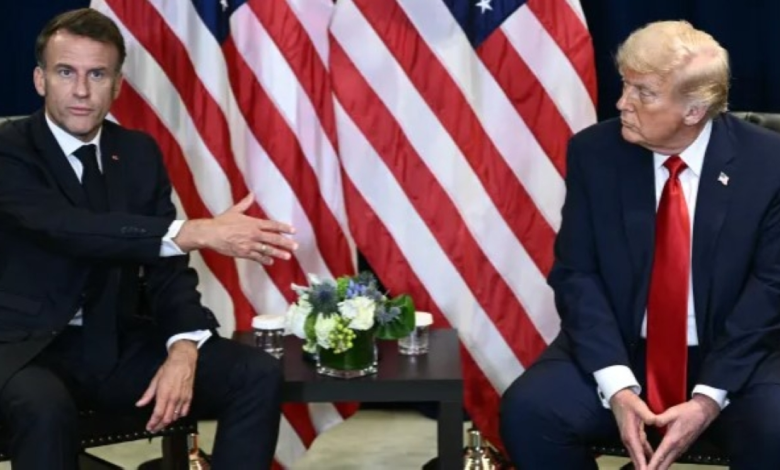
In a pivotal annual address outlining French foreign policy, President Emmanuel Macron a scathing critique of current US policies, expressing deep concern over what he described as the United States' gradual abandonment of its traditional allies. Speaking to a gathering of French ambassadors at the Élysée Palace, Macron painted a bleak picture of the future of international relations in light of declining respect for international norms.
The crisis of multipolarity and new aggression
The French president did not merely point to the cooling of transatlantic relations; he went further, describing the current international landscape as witnessing a growing "neo-colonial aggression" in diplomatic relations. Macron noted that multilateral institutions, which had served as a safeguard for global stability since the end of World War II, are experiencing a steady decline in their performance and effectiveness.
This speech comes in the context of Macron’s repeated calls to strengthen “European strategic autonomy,” as the French president believes it is necessary for Europe to build its own security and defense system away from total dependence on Washington, especially in light of the geopolitical shifts that show the desire of the great powers to “divide the world” among themselves, ignoring the interests of smaller countries or old allies.
Tensions flare in the Atlantic: The Russian narrative
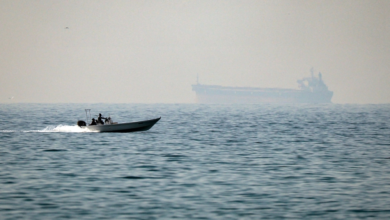
Simultaneously with the political warnings emanating from Paris, the situation on the ground witnessed a dangerous escalation, reinforcing fears of a breakdown in international order. Moscow directly accused the United States of instigating military tensions and threatening the safety of international navigation, following a maritime incident in the North Atlantic.
The Russian Foreign Ministry announced that US forces had seized and detained a Russian-flagged oil tanker, a move Moscow described as "provocative." The Kremlin asserted that such actions do not fall within the framework of international law enforcement, but rather constitute a form of "maritime bullying" that could lead to serious consequences.
Repercussions of the tense international situation
Observers believe that the timing of the sharp French criticism, coinciding with the Russian-American clash, reflects a state of disarray in the global order. On the one hand, European powers feel that the American security umbrella is no longer as reliable as it once was, prompting them to seek strategic alternatives. On the other hand, direct confrontations between nuclear powers (Russia and the United States) in international waterways are raising the level of military risks to unprecedented levels.
The Russian Foreign Ministry concluded its statement by warning that "Washington's willingness to cause international crises" through unilateral steps will only lead to further military and political tension, putting the world before scenarios open to all possibilities in the absence of effective deterrence mechanisms.