
Train collision north of Copenhagen results in injuries
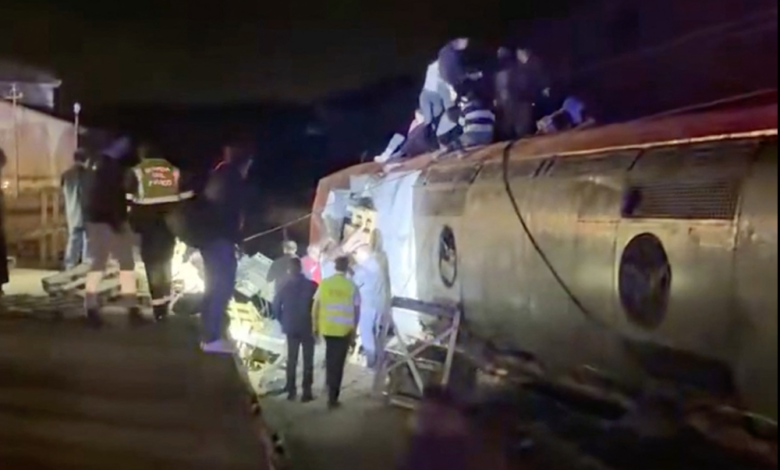
Denmark was rocked by a train collision on Thursday morning, injuring at least ten people. The accident occurred about 40 kilometers north of Copenhagen, on the line between the towns of Hillerød and Kägrup, a vital part of the local transport network in northern Zealand.
According to initial reports from local police and Danish media, emergency and rescue teams rushed to the scene immediately after receiving the report. A police statement described the incident as "serious," and the surrounding area was cordoned off to allow rescue teams to work and evacuate the injured. The injured were taken to nearby hospitals for treatment, and the severity of their injuries was not immediately clear.
Background on the railway network in Denmark
This accident comes as a rare and surprising event in Denmark, a country that prides itself on having one of the safest and most advanced railway networks in Europe and the world. Danish Railways, primarily operated by DSB (Danske Statsbaner) along with local companies like Lokaltog, which operates the line where the accident occurred, is known for its stringent safety standards and modern infrastructure. The network relies on advanced signaling systems and precise operating procedures to ensure the safety of millions of passengers annually. For this reason, collisions are extremely rare, making this incident a matter of great concern for both authorities and the public.
Expected impact and ongoing investigations
Locally, the incident caused major disruption to train services in northern Copenhagen, affecting thousands of commuters who rely on the service for their daily commutes. Service was immediately suspended along the affected line, with alternative buses provided to transport passengers.
The accident is expected to have a wider impact, as the Danish Accident Investigation Board (Havarikommissionen) has launched an immediate and thorough investigation to determine the precise causes of the collision. The investigation will focus on several possible aspects, including human error, a technical malfunction in the trains, or a failure in the signaling and control systems. The results of this investigation will be crucial not only for understanding the circumstances of the accident but also for implementing any necessary modifications to safety procedures to prevent similar incidents in the future and maintain the excellent reputation of the country's rail transport sector.