The Revolutionary Guard begins maneuvers in the Strait of Hormuz ahead of the Geneva talks

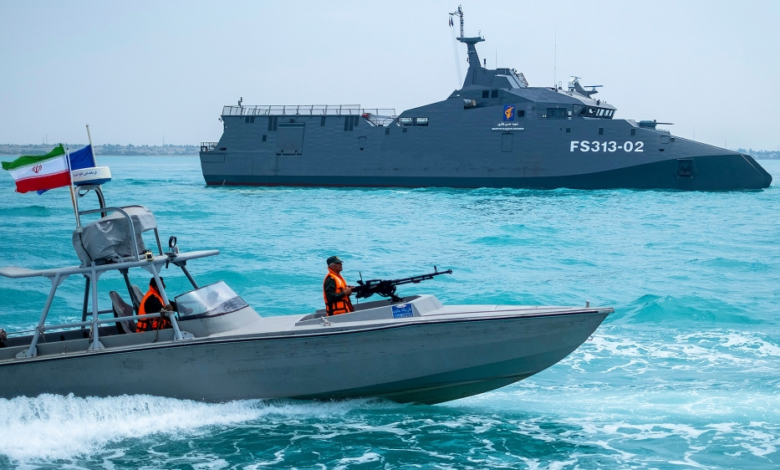
In a move carrying significant political and military implications, Iran's Revolutionary Guardlarge-scale military exercises on Monday in the Strait of Hormuz . This deployment, according to Iranian state television, comes on the eve of a new and crucial round of talks between Tehran and the United States in Geneva, further complicating the diplomatic landscape.
Details of the maneuvers and their sensitive timing
State television announced that these military exercises, the duration of which was not specified, are primarily aimed at enhancing combat readiness and preparing the Revolutionary Guard forces to confront "potential security and military threats" in the vital waterway. These maneuvers coincide with a US military buildup in the region, where Washington has deployed a significant naval force, further escalating tensions and military activity in the Gulf.
The strategic importance of the Strait of Hormuz
This event cannot be understood in isolation from the geopolitical significance of the location of the maneuvers. The Strait of Hormuz is the world's most important oil transit chokepoint, with approximately 20% of global oil production passing through it daily. Iranian officials have long brandished the threat of "closing the strait" as a strategic option in response to sanctions or military threats, making any military activity in this geographical area a matter of intense scrutiny for global energy markets and the international community, given its direct impact on supply chains and oil prices.
Diplomatic track amid escalation
These exercises serve as a dual message ahead of the anticipated second round of talks between Iran and the United States in Switzerland, mediated by Oman. While US President Donald Trump urges Iran to reach a new agreement, Washington is pursuing a policy of "maximum pressure" through military buildups, a move Tehran counters by demonstrating its defensive and offensive capabilities, asserting that it is negotiating from a position of strength, not weakness.
Intelligence surveillance and maritime control
In a related context, Revolutionary Guard Navy Commander Mohammad Akbarzadeh confirmed that Iranian forces have informational control over the situation, noting that all foreign vessels in the region are under "complete intelligence surveillance." Akbarzadeh added in his remarks on Monday that these naval vessels fall within the scope of Iran's defense capabilities, reflecting Iran's strategy of relying on fast attack craft and naval missiles to counterbalance the naval superiority of the US fleet.
Iranian media, through their coverage of these maneuvers, aim to highlight Tehran's ability to "respond quickly," and to convey the message that the diplomatic track in Geneva does not mean abandoning military options to protect Iranian national interests in the Gulf.