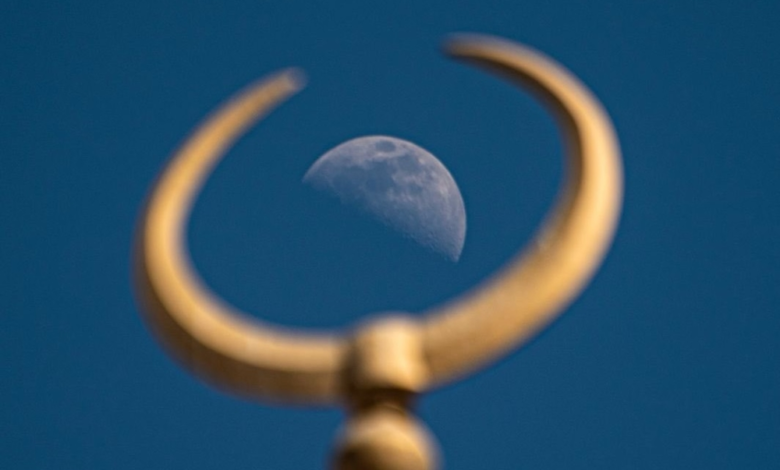
The first quarter of the Ramadan 1447 AH moon was observed in the sky of Arar

The skies over the Northern Borders region of Saudi Arabia, specifically in the city of Arar, witnessed a remarkable astronomical observation this Tuesday evening of the first quarter phase of the crescent moon of Ramadan 1447 AH. This event exemplifies the accuracy of astronomical calculations and the natural beauty of the moon's phases during its monthly orbit around the Earth.
Details of astronomical observation in Arar
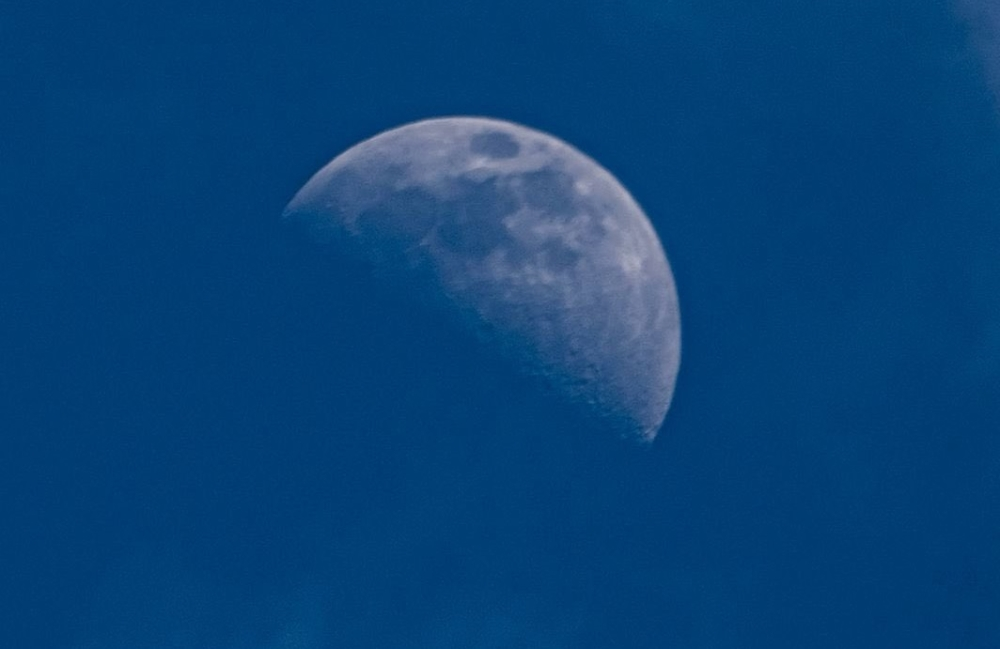
Adnan Khalifa, a member of the Astronomy and Space Club, reported that the crescent moon of Ramadan officially reached its first quarter phase at 3:28 PM today. During this phase, half of the moon's disk is fully illuminated by sunlight, while the other half is in shadow, as a result of the moon being at approximately a 90-degree angle to the sun from the perspective of an observer on Earth.
The scientific importance of the first quadrant
The first quarter phase is of particular importance to both professional and amateur astronomers, as it is the ideal period for observing the lunar surface features. During this phase, the terminator (the line separating the illuminated and dark portions of the moon) is at its sharpest, casting long shadows within lunar craters and along mountain ridges. This allows observers to see these features in three dimensions and with fine details not available during a full moon.
Northern Borders Environment and Astronomy
This observation is part of a series of ongoing monitoring of astronomical phenomena in the Northern Borders region, which is characterized by a desert environment and generally clear skies, thus minimizing light pollution and enhancing the quality of astronomical observations. These natural factors have contributed to increased interest among the local community and astronomy enthusiasts in tracking the movement of celestial bodies and accurately documenting the different phases of the moon.
Time significance in the Islamic calendar
Besides its astronomical significance, observing the first quarter moon has temporal significance in the Islamic calendar. The moon's arrival at this phase indicates the near end of the first week of Ramadan and the approach of the month's midpoint, when the moon will be full. Following these phases is an integral part of Arab and Islamic heritage for determining prayer times and religious observances.