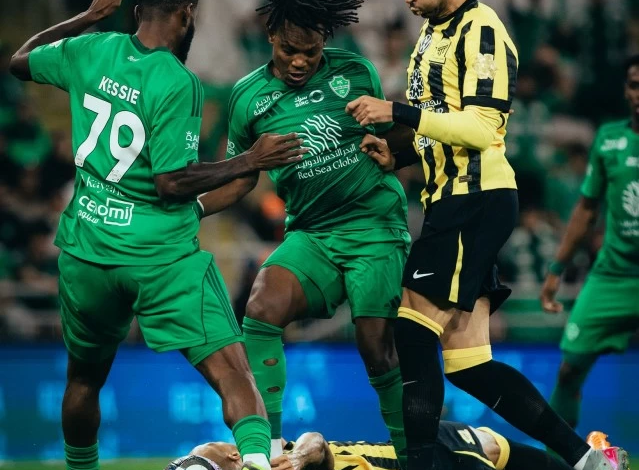

Al-Ahli Saudi FC and their German coach, Matthias Jäissle, have proven their dominance in the Saudi Professional League (Roshan League), not only through their impressive results and title aspirations, but also through a sustainable technical strategy focused on developing local talent. This approach was clearly demonstrated in the fiery Jeddah derby against their arch-rivals, Al-Ittihad FC, which took place at King Abdullah Sports City Stadium ("The Shining Jewel") as part of the 25th round of matches.
Al-Ahly's superiority with a local flavor
In a match played before a packed stadium, Al-Ahli secured a derby victory with a score of 3-1. The remarkable aspect of this win wasn't just the scoreline, but also coach Yassla's heavy reliance on local players, who delivered a stellar performance against a host of international stars. The local players were particularly prominent in the starting lineup, with the back three of Zakaria Hawsawi, Rayan Hamed, and Ali Majrashi leading the defense, providing solid support from midfielder Ziyad Al-Juhani.
The substitutes' bench makes the difference
The local brilliance wasn't limited to the starting lineup; it extended to the substitutes, who proved crucial in maintaining the game's rhythm. Yassleh brought on several key players, including international striker Firas Al-Buraikan, as well as Mohammed Bakr, Saleh Abu Al-Shamat, and Eid Al-Mawlid. This diversity of local options reflects the depth of Al-Ahli's squad and the coaching staff's ability to prepare Saudi players to be strong contenders in the most competitive league in the Arab and Asian leagues.
Positive implications for the Saudi national team
These exceptional performances by Al-Ahli players are of paramount importance, extending beyond the club to benefit the Saudi national team. French coach Hervé Renard, manager of the Green Falcons, stands to gain the most from this resurgence in the local talent. With crucial international fixtures approaching, most notably the qualifiers and preparations for the 2026 World Cup finals, Renard needs players who are technically and physically ready and regularly participate in highly competitive matches like the derby.
An artistic message in the era of foreign professionalism
While most Saudi Pro League clubs rely on foreign professionals in key positions, Al-Ahli has set a commendable example in balancing international recruitment with the development of local talent. The success of eight local players in making their mark in a match as significant as the Jeddah derby sends a reassuring message about the future of Saudi football, confirming that Saudi players are capable of developing and excelling when given the confidence and opportunity under astute coaching.