
Agricultural and economic achievement in the Saudi bee sector
The Kingdom of Saudi Arabia has achieved a significant agricultural and economic milestone, with honey production jumping to 7,800 tons annually. This remarkable development comes as part of the ongoing efforts to achieve the goals of Saudi Vision 2030, which prioritizes food security and diversifying national income sources. The Ministry of Environment, Water and Agriculture, in cooperation with relevant international organizations, aims to increase domestic production to 10,000 tons within the next five years, relying on more than one million local beehives that are highly resilient to the harsh climatic conditions across the Kingdom.
Historical context and the role of modern technology
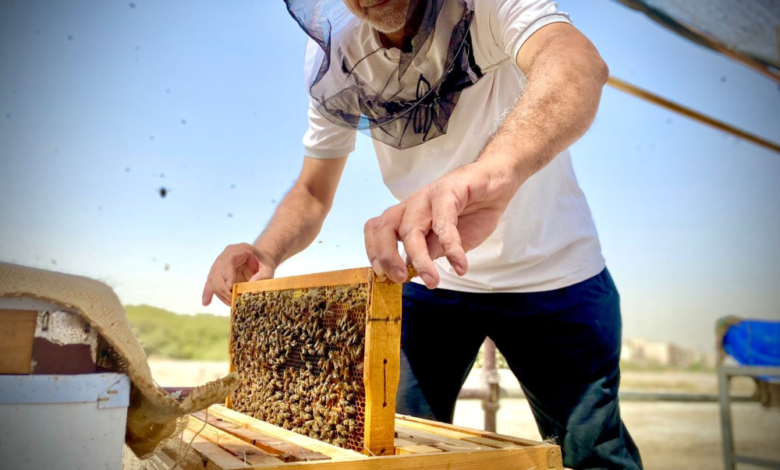
Historically, beekeeping in the Arabian Peninsula has been deeply intertwined with the region's culture and heritage, particularly in mountainous and southern areas such as Asir, Al-Baha, and Taif, which are renowned for producing some of the finest honey varieties, including Sidr, Talh, and Samar. In this context, Dr. Ramzi Al-Sarhan, a beekeeping expert with the Food and Agriculture Organization of the United Nations (FAO) in the Kingdom, explained that the sector has undergone a radical transformation, shifting from traditional methods to the adoption of modern and advanced technologies. This strategic shift has contributed to a doubling of previous production, which did not exceed 3,000 tons, reflecting the success of the development plans implemented to advance the agricultural sector.
Consumption gap and protection of local breeds
Despite this significant increase in production, the Saudi market still needs more to meet growing demand. Dr. Al-Sarhan pointed out that the high domestic consumption of honey, due to its significant nutritional and medicinal value in Saudi culture, requires an annual supply of approximately 25,000 tons. To bridge this gap and reduce reliance on imports, the UN expert revealed the successful completion of the first phase of a project to protect the local bee breed. This breed, adapted to the Kingdom's environment for thousands of years, is considered a national treasure, and preparations are currently underway to launch the second phase to ensure the sustainability of this vital sector and protect it from environmental threats and diseases.
Capitalizing on flowering seasons and boosting the local economy
To boost productivity and meet demand, the sector is supported by approximately one million imported bee colonies, coinciding with the Kingdom's nine diverse flowering seasons. This unique climatic and botanical diversity allows active beekeepers to utilize natural resources to produce honey year-round, maximizing economic returns and positively impacting non-oil GDP.
Product diversification and empowering Saudi women
The development in the beekeeping sector has not been limited to increasing honey production; it has also extended to raising investment awareness among beekeepers. Efforts have been directed towards investing in comprehensive hive products that carry high added economic value, such as pollen, beeswax, royal jelly, and bee venom. In a pioneering step reflecting the goals of Vision 2030, Al-Sarhan praised the growing role of Saudi women beekeepers who have entered the field of high-quality production. Saudi women have actively contributed to the development of advanced processing industries, including natural candles, organic soaps, and cosmetics, thus enhancing women's empowerment in the agricultural sector and opening new horizons for entrepreneurship.