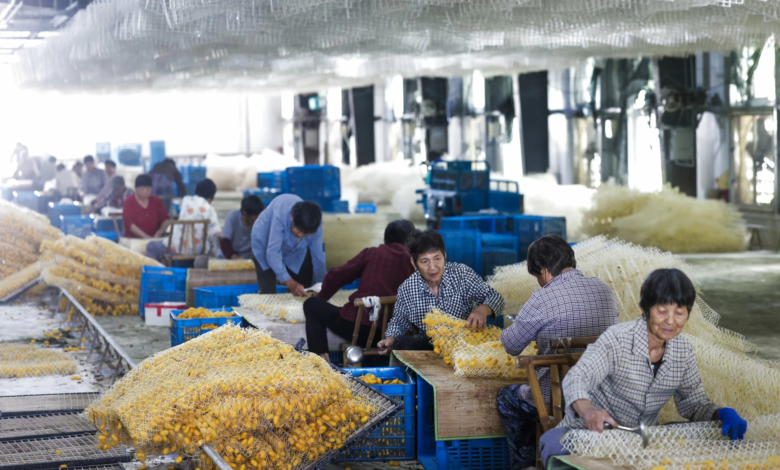

تستمر زراعة دودة القز، المعروفة علمياً باسم “Sericulture”، في لعب دور حيوي في اقتصادات العديد من المناطق الريفية، خاصة في دول مثل الصين التي تعد الموطن الأصلي لهذه الصناعة العريقة. وكما تظهر الصور الحديثة من صحيفة “إيكونومي ديلي الصينية”، يواصل المزارعون بجد تهيئة البيئات المثالية لتربية ديدان القز، وحصاد شرانقها بعناية فائقة، ووضعها في شبكات متخصصة تمهيداً لنقلها إلى المستثمرين والمصانع. هذه العملية، التي تبدو بسيطة، هي في الواقع تتويج لآلاف السنين من المعرفة والتقاليد التي حولت خيطاً طبيعياً بسيطاً إلى واحد من أكثر الأقمشة فخامة وقيمة في العالم.
خلفية تاريخية: من أسطورة صينية إلى طريق الحرير
تعود جذور صناعة الحرير إلى الصين القديمة قبل أكثر من 5000 عام. تقول الأسطورة إن الإمبراطورة “لي زو” اكتشفت الحرير بالصدفة عندما سقطت شرنقة دودة قز في كوب الشاي الساخن الخاص بها، ولاحظت كيف تفككت الشرنقة إلى خيط طويل وقوي. لأكثر من ألفي عام، احتفظت الصين بسر إنتاج الحرير لنفسها، حيث كان الكشف عن هذه التقنية جريمة عقوبتها الإعدام. وقد ساهم هذا الاحتكار في جعل الحرير سلعة ثمينة للغاية، مما أدى إلى إنشاء “طريق الحرير” الشهير، وهو شبكة من الطرق التجارية التي ربطت الشرق بالغرب، ولم تكن لنقل البضائع فحسب، بل لتبادل الثقافات والأفكار والتقنيات أيضاً.
الأهمية الاقتصادية والتأثير العالمي
على المستوى المحلي، توفر تربية دودة القز مصدر دخل أساسي للملايين من الأسر الزراعية، مما يساهم في التنمية الريفية والحد من الفقر. تتطلب هذه الزراعة عمالة مكثفة، بدءاً من زراعة أشجار التوت التي تتغذى عليها الديدان، وصولاً إلى الحصاد الدقيق للشرانق. أما على الصعيدين الإقليمي والدولي، فإن صناعة الحرير تمثل قطاعاً اقتصادياً مهماً. تهيمن دول مثل الصين والهند على الإنتاج العالمي، وتلعب دوراً محورياً في تحديد أسعار واتجاهات سوق المنسوجات الفاخرة. لا يقتصر تأثير الحرير على الموضة والأزياء، بل يمتد إلى مجالات أخرى؛ حيث تستخدم بروتيناته في صناعة مستحضرات التجميل، كما يُستخدم في المجال الطبي لإنتاج خيوط جراحية قابلة للتحلل الحيوي نظراً لقوته وتوافقه مع جسم الإنسان. إن استمرار هذه الصناعة العريقة يضمن الحفاظ على تراث ثقافي غني، وفي الوقت نفسه يدعم اقتصادات حديثة تسعى للتنويع والابتكار.