A virtual reality experience simulating the transportation of pilgrims in the holy sites

Introduction: Early preparations to ensure the comfort of the pilgrims
In a proactive step reflecting the Kingdom of Saudi Arabia's commitment to providing the best possible services to pilgrims, the General Transport Center, affiliated with the Royal Commission for Makkah City and the Holy Sites, conducted a large-scale virtual simulation of the pilgrim transportation system in the Holy Sites. This initiative is part of the early preparations for the 1447 AH Hajj season, undertaken in coordination with more than 24 governmental and operational entities. The simulation aimed to test operational efficiency and enhance coordination among all relevant parties to ensure smooth traffic flow and the safety of pilgrims.
Historical context: The evolution of the transportation system during Hajj
Historically, the transportation system for pilgrims in the holy sites has undergone radical developments over the decades. From relying on traditional means of transport, it has transformed into one of the most complex and advanced transportation systems in the world, managing the movement of millions of people within a limited geographical area and a very short timeframe. The Saudi government has invested billions of riyals in developing the infrastructure, from establishing modern road networks and dedicated routes to the Al-Mashaaer Metro and the General Syndicate of Cars, making the current transportation experience a global model for advanced crowd management.
Details of the virtual experience and its huge numbers
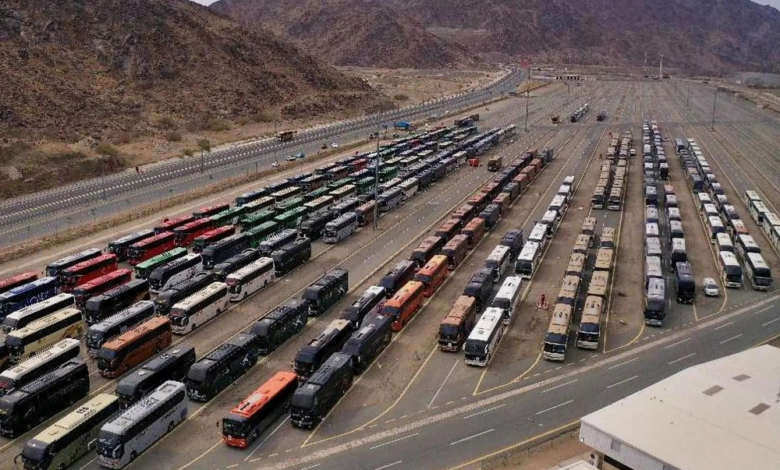
The experiment relied on a precise operational model simulating the movement of pilgrims between Mecca and the holy sites. It involved a simulation of transporting over 1.2 million pilgrims virtually, utilizing 3,000 buses across five main operational phases covering all stages of transportation. These operations took place along 15 main routes, allowing relevant authorities to test crowd flow and traffic management efficiency. The plan included the execution of over 75,000 scheduled trips, with the extensive participation of more than 20,500 operational personnel representing 74 transportation companies, clearly reflecting the scale and complexity of the transportation system during the Hajj season.
Implementing operational phases and handling emergencies
The exercise included a meticulous field simulation of the various operational phases, from preparation and readiness to the movement of pilgrims to Mount Arafat, the subsequent movement to Muzdalifah, and finally the departure to Mina. To ensure maximum preparedness, the simulation incorporated multiple emergency scenarios, such as fire safety and rapid response, as well as handling medical emergencies on buses and administering first aid. The system's readiness to handle bus breakdowns along routes and provide immediate replacements to guarantee uninterrupted service was also tested, along with measuring response times for unscheduled incidents.
Technology and real-time monitoring in crowd management
Technology played a pivotal role in this trial, with real-time monitoring of bus movements being tested through the General Transport Center's monitoring and control room. Instant reports were generated to support rapid decision-making and facilitate the work of the system and relevant stakeholders. Communication channels and escalation mechanisms between participating entities were also evaluated, enhancing operational efficiency and response times under various circumstances.
Importance and expected impact locally and internationally
These proactive trials are of paramount importance on several levels. Locally, they contribute to alleviating traffic congestion in the Holy City and ensure the safety of citizens, residents, and pilgrims alike. Regionally and internationally, the success of this system sends reassuring messages to all Islamic countries worldwide, affirming the Kingdom's capability and complete readiness to host their citizens and facilitate their smooth and easy travel. These efforts are fully aligned with the objectives of the Guests of God Service Program, one of the programs of Saudi Vision 2030, which places enriching the pilgrim experience and facilitating their accommodation at the forefront of its strategic priorities.