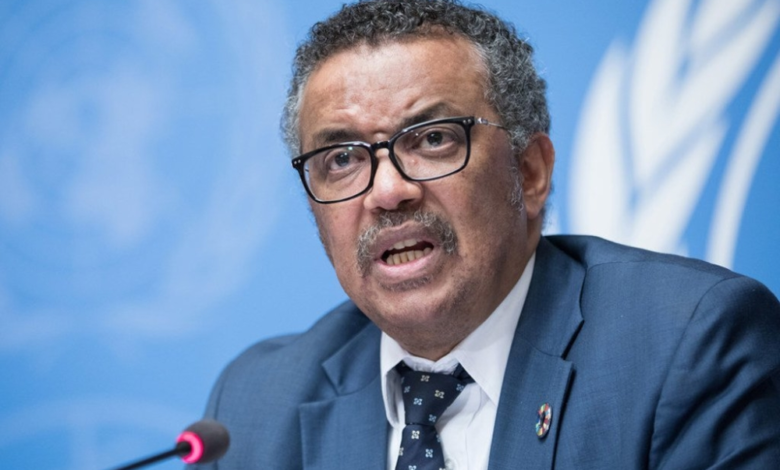

The Director-General of the World Health Organization, Tedros Adhanom Ghebreyesus, categorically rejected the justifications offered by the United States for its withdrawal from the UN agency, describing them as "invalid." Ghebreyesus's remarks on Saturday came as a direct response to the US move, which has sparked widespread international controversy, warning of the serious consequences this decision will have on global health security.
Warnings of a health security vacuum
In a post on the X platform, Tedros asserted that the United States' formal withdrawal this week "makes the United States and the world less safe." He added firmly, "Unfortunately, the reasons given for the United States' decision to withdraw from the World Health Organization are incorrect," emphasizing that the UN agency "has always treated the United States and all member states with full respect for their sovereignty," thus refuting accusations that the organization oversteps the sovereign powers of nations.
Background to the US decision and the accusations leveled
This controversy comes after US Secretary of State Marco Rubio and Health Secretary Robert F. Kennedy Jr. announced, in a joint statement issued Thursday, Washington's formal withdrawal from the organization. The two US officials based their decision on accusations of "numerous failures during the COVID-19 pandemic" by the WHO, as well as the claim that the organization "repeatedly acted against US interests." These accusations are not new, but rather reflect escalating tensions in relations between Washington and the international organization regarding mechanisms for managing health crises.
Historical context and the American role
It is worth noting that the relationship between the United States and the World Health Organization has experienced similar tensions in the past, with Washington threatening to withdraw in 2020. The United States has historically been the WHO's largest donor, contributing a significant portion of its budget allocated to combating infectious diseases such as polio, malaria, and tuberculosis, as well as emergency health programs. Therefore, the withdrawal of a country as large and influential as the United States is not merely a political move; it threatens to create a financial and logistical deficit that could hinder the organization's ability to respond to future pandemics.
Repercussions of the withdrawal on the international stage
Observers and public health experts believe this withdrawal could fragment international efforts to combat transboundary diseases. The lack of coordination with Washington could create gaps in the early warning system for epidemics and weaken the international community's ability to share vital data and vaccines. Furthermore, this withdrawal could open the door to geopolitical shifts within the organization, as other international powers may seek to fill the void left by the United States, reshaping the map of global health influence. While the WHO has not yet officially confirmed the decision, the exchanged messages suggest a new and complex phase in international health relations.