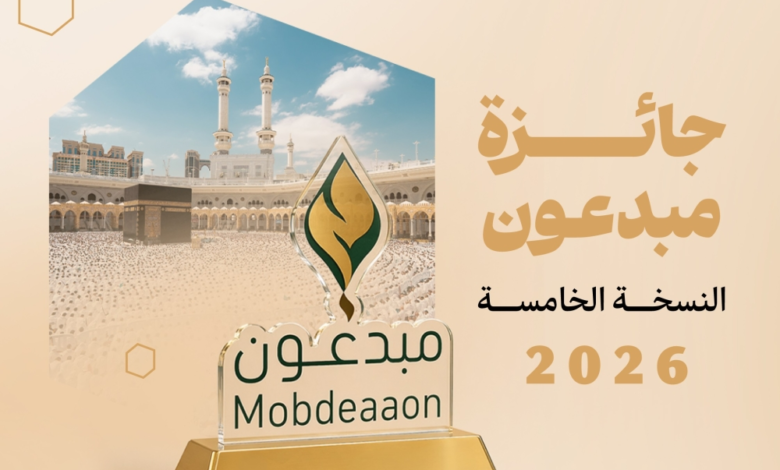

The Ministry of Hajj and Umrah launches the fifth edition of the “Innovators” award to stimulate innovation
The Saudi Ministry of Hajj and Umrah has announced the launch of the fifth edition of the "Innovators" Award, a strategic initiative aimed at attracting innovative ideas and initiatives that contribute to improving the services provided to pilgrims. This annual award, with a registration deadline of May 9, 2024, serves as a leading platform to stimulate innovation and engage the private sector and institutions operating in the Hajj and Umrah sector to develop practical and sustainable solutions to operational challenges, thereby enhancing the quality of the Hajj and Umrah experience.
General context and the Kingdom's Vision 2030
The “Innovators” Award falls within the broader framework of the Kingdom’s ongoing efforts to achieve the goals of Vision 2030, which places great emphasis on the Hajj and Umrah sector. The Vision aims to enrich the religious and cultural experience of pilgrims, facilitate their journey at every stage, and increase the capacity to accommodate larger numbers of visitors. This award serves as an effective tool for translating these objectives into tangible reality by encouraging creative minds to develop services and solutions befitting the status of the Two Holy Mosques and keeping pace with global technological advancements.
The importance of the award and its expected impact
The award's significance stems from its role as a bridge between government efforts and the capabilities of the private sector. Locally, it fosters a positive competitive environment among companies and encourages a culture of innovation and quality, directly impacting the level of services provided. Internationally, the award's successful initiatives enhance the Kingdom's reputation as a leader in crowd management and the provision of advanced services during religious seasons, setting a global example in leveraging technology to serve pilgrims from around the world.
The main areas of the "Creators" award
The award covers four main areas that represent the core development axes in the Hajj and Umrah system, namely:
1. Work system
This area focuses on improving internal procedures and operational efficiency within service delivery facilities. This includes initiatives aimed at enhancing the efficiency of work teams, strengthening coordination between different entities, streamlining operational processes, and supporting data-driven decision-making mechanisms for faster and more effective responses.
2. Basic services
This field focuses on initiatives that directly address the daily needs of pilgrims. This includes developing innovative solutions in areas such as transportation between holy sites, crowd management and organization, accommodation and catering services, and healthcare, with a focus on providing solutions that enhance the efficiency of these services and ensure a smoother and more organized experience.
3. Digital Services
This field aims to leverage modern technologies to develop the Hajj and Umrah system through initiatives that utilize tools such as artificial intelligence, big data analytics, the Internet of Things, and smart applications. The goal is to improve service quality, expedite procedures, and enhance decision-making efficiency among service providers, thus contributing to the realization of the "Smart Hajj" concept.
4. Enrichment services
This field aims to deepen the religious and cultural experience of pilgrims through initiatives that provide educational and awareness-raising content, enhancing understanding of the rituals and connecting visitors to the historical and spiritual dimensions of the holy sites. It also includes developing interactive experiences that add cognitive and sensory dimensions to the spiritual journey.
The award, which is organized annually under the patronage of His Excellency the Minister of Hajj and Umrah, Dr. Tawfiq bin Fawzan Al-Rabiah, seeks to achieve a set of strategic goals, most notably enhancing integration between the Ministry and the private sector, raising the level of competitiveness, and highlighting successful models to support sustainable development in the coming seasons.