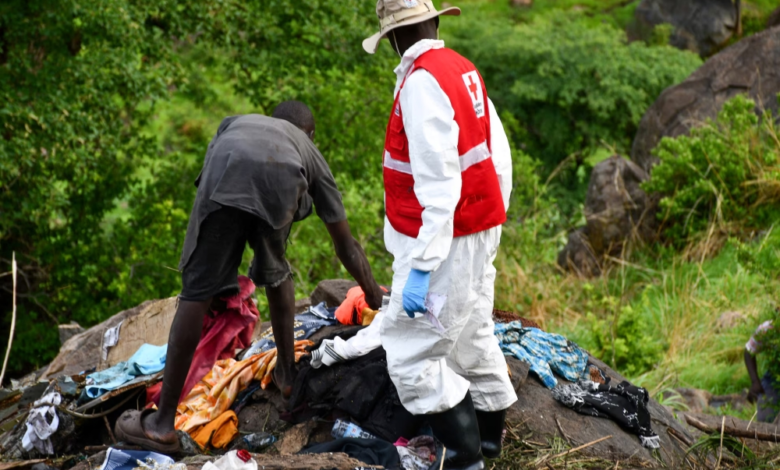

Fourteen people, including crew members, were killed on Monday when a small Cessna passenger plane crashed shortly after takeoff from Juba International Airport, the capital of South Sudan. The South Sudan Civil Aviation Authority confirmed in an official statement that there were no survivors, adding another tragic chapter to the country's aviation safety record.
According to the statement, the plane took off at 7:15 a.m. GMT on a domestic flight, but quickly disappeared from radar screens and crashed about 20 kilometers from the capital. It was carrying 12 South Sudanese passengers and two Kenyan pilots. Initial reports indicated that poor weather conditions and low visibility may have been the primary cause of the tragic accident.
A recurring pattern of air accidents
This incident is not isolated. South Sudan, which gained independence from Sudan in 2011, has a long and troubling history of plane crashes. These disasters are often attributed to a combination of factors, most notably the use of old and dilapidated aircraft, overloading beyond the aircraft's capacity, and the harsh weather conditions that the region experiences during certain seasons. Years of civil war and political instability have led to the deterioration of infrastructure, including an aviation sector that lacks rigorous oversight and modern maintenance standards.
Among the most notable past incidents was the 2015 cargo plane crash in Juba, which killed 36 people. Recent years have also seen numerous accidents involving small aircraft transporting passengers and goods between cities and remote villages, making air travel—a necessity in a country with an underdeveloped and unsafe road network—highly risky.
The importance and implications of the incident
Locally, the incident represents a humanitarian tragedy that adds to the suffering of the people of South Sudan and deepens the lack of trust in local transportation. Given the heavy reliance on air travel and the delivery of humanitarian aid due to the difficulty of accessing many areas by land, the recurrence of such incidents threatens a vital lifeline for remote communities.
At the regional and international levels, the incident reinforces the negative image of the country's aviation sector and may prompt international organizations, such as the International Civil Aviation Organization (ICAO), to impose further restrictions or warnings regarding South Sudanese airspace. It also impacts the operations of international humanitarian organizations, such as the World Food Programme and the United Nations, which rely heavily on chartered flights to deliver vital aid across the country, potentially complicating future relief efforts.