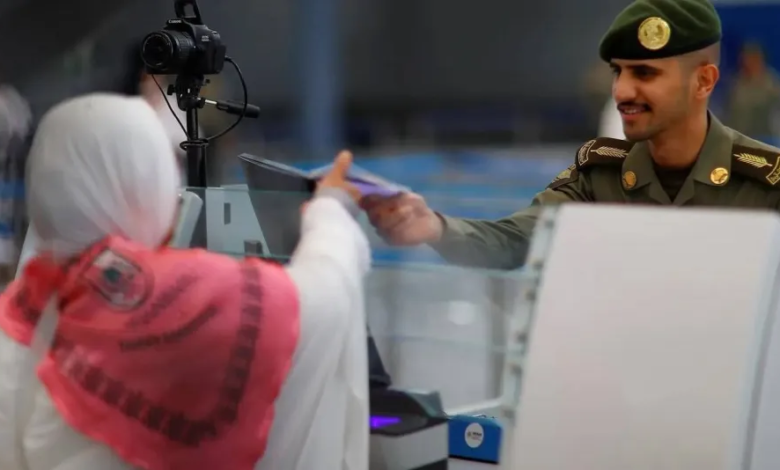
Saudi Arabia begins receiving the first groups of pilgrims for the new Hajj season

Saudi Arabia begins receiving the first groups of pilgrims for the Hajj season
The Kingdom of Saudi Arabia has officially announced the arrival of the first groups of pilgrims from around the world to perform Hajj this year. The first flights landed at King Abdulaziz International Airport in Jeddah and Prince Mohammad Bin Abdulaziz International Airport in Madinah, amidst a comprehensive system of services and facilities prepared by the relevant authorities to ensure the comfort of the pilgrims from the moment they arrive until their departure.
Intensive preparations and innovative initiatives
This step comes as the culmination of months of intensive preparations undertaken by the government of the Custodian of the Two Holy Mosques. In recent years, the “Makkah Route Initiative” has emerged as one of the most important strategic initiatives aimed at completing passport, customs, and health requirements for pilgrims in their home countries before departure. This allows them to travel directly to their accommodations in Makkah and Madinah without having to wait at Saudi airports, reflecting significant technological and logistical advancements in crowd management.
Historical background of serving the guests of God
Historically, Hajj is considered the fifth pillar of Islam. In the past, the pilgrimage was fraught with danger and took many months. With the establishment of the Kingdom of Saudi Arabia, the state assumed a major historical and religious responsibility: the development of the Two Holy Mosques and the securing of the Hajj routes. The past decades have witnessed the largest expansions in the history of the Grand Mosque in Mecca and the Prophet's Mosque in Medina, in addition to the development of infrastructure in the holy sites (Mina, Muzdalifah, and Arafat), such as the construction of the Al-Mashaaer Metro and the Jamarat facility, transforming the arduous journey into an accessible and safe spiritual experience.
Local and international importance and impact
Domestically, the Hajj season represents a positive mobilization of all sectors of the state, with the Ministries of Hajj and Umrah, Health, Interior, and Transport working together to provide the best possible services. The season also contributes to stimulating economic activity and providing seasonal job opportunities, in line with the objectives of Saudi Vision 2030, which seeks to improve the quality of services provided to pilgrims and increase capacity.
At the regional and international levels, the Kingdom's success in managing this largest global gathering of millions of Muslims from over 150 countries reinforces its leading position in the Islamic world. It also highlights its exceptional ability to manage crowds and provide healthcare and security within limited geographical areas and short timeframes, setting a global example for managing major events.
Integrated health and security system
To ensure the safety of pilgrims, the Saudi Ministry of Health has prepared advanced hospitals and health centers in Mecca, Medina, and the holy sites, equipped with the latest technology and staffed with qualified medical personnel to handle any emergency. Simultaneously, security authorities are implementing precise traffic and organizational plans to prevent overcrowding and ensure smooth traffic flow, underscoring the Kingdom's commitment to ensuring that pilgrims perform their rituals in an atmosphere of tranquility and spirituality.