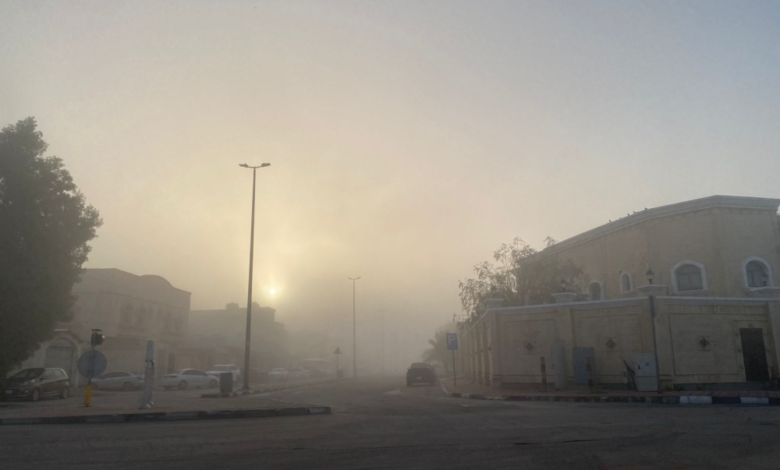

The National Center for Meteorology issued an important weather alert for the Al-Jawf region, indicating that the area will be affected by light fog that may reduce horizontal visibility. According to the report, this weather condition will particularly affect the governorates of Qurayyat and Tabuk, and is expected to persist until the early morning hours of Friday.
The center explained in its report that the weather conditions would begin at 2:00 AM and continue until 8:00 AM, with horizontal visibility expected to range between 3 and 5 kilometers during this period. This warning comes as part of the center's ongoing monitoring of weather conditions to ensure the safety of citizens, residents, and highway users in those areas.
Weather forecast in other regions of the Kingdom
In a related context, the National Center for Meteorology's report was not limited to the Al-Jawf region alone, but included comprehensive forecasts for several regions across the Kingdom. The report indicated the continuation of surface winds stirring up dust and sand, reducing horizontal visibility across wide areas including the Northern Borders, Hail, Madinah, Makkah, Riyadh, and Najran regions. These effects also extend to the eastern parts of the Asir and Al-Baha regions.
On another note, the center did not rule out the possibility of light rain, which may be accompanied by the formation of dense fog at times over parts of the southwestern highlands of the Kingdom, which calls for caution and vigilance while driving on mountain roads and slopes.
The importance of weather warnings and public safety
These alerts are of paramount importance given the Kingdom of Saudi Arabia's significant geographical and climatic diversity. At this time of year, northern regions like Al-Jawf experience fluctuating weather conditions characterized by lower temperatures and fog formation, while other areas may experience wind and dust storms. The National Center of Meteorology plays a vital role in monitoring these phenomena using state-of-the-art technology and an early warning system, providing relevant authorities and the public with accurate information to facilitate the implementation of necessary preventative measures.
Tips and guidelines for drivers
Due to the expected weather conditions, traffic safety experts advise drivers in fog-affected areas, particularly in Al Qurayyat and Tabuk, to exercise extreme caution. Key guidelines include reducing speed according to road conditions, using fog lights or low beam headlights instead of high beams which can reduce visibility due to reflections on water droplets, maintaining a safe following distance to avoid sudden accidents, and avoiding abrupt lane changes.
In areas experiencing dust-laden winds, specialists urge respiratory and asthma patients to avoid direct exposure to dust, keep windows tightly closed in homes and vehicles, and follow weather updates regularly through official channels to ensure everyone's safety.