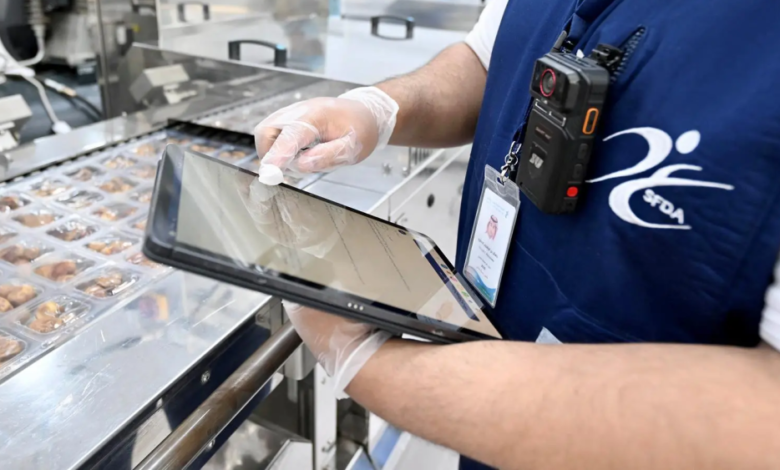
The Food and Drug Authority enhances its monitoring during Hajj with cameras and advanced technologies

A pioneering technological transformation to serve the pilgrims
The Kingdom of Saudi Arabia continues to provide a leading global model in crowd management and ensuring the safety of pilgrims during the Hajj season. In this context, the Saudi Food and Drug Authority (SFDA) announced the deployment of a sophisticated system of modern technologies, most notably body cameras, to support its field teams and enhance response and monitoring capabilities at facilities under its supervision, as part of its ongoing efforts to bolster operational readiness during the Hajj season.
Historical context and digital transformation
Historically, the Kingdom of Saudi Arabia has placed great importance on the safety of pilgrims since its founding. With the increasing number of pilgrims each year, the need for specialized institutions to ensure health and safety became paramount, leading to the establishment of the Saudi Food and Drug Authority (SFDA) to play a pivotal role in this area. In line with the objectives of Saudi Vision 2030, the SFDA has undergone a significant digital and technological transformation to enhance oversight and ensure the quality of consumer products. The Hajj season presents the greatest and most significant challenge, requiring the combined efforts of all sectors to provide exceptional services that guarantee the safety and well-being of pilgrims.
Body cameras and field surveillance
As part of this ongoing technological transformation, the authority revealed the integration of body cameras into field inspection operations during the current Hajj season. These cameras not only document but also offer advanced features, including live streaming to the operations center and real-time audio communication with inspection teams during their duties. This direct connection enables immediate technical and legal support for inspectors, as well as the activation of emergency and rescue services to enhance the safety of field teams and ensure rapid response to urgent situations.
Advanced equipment and rapid response
The preparations didn't stop there; they also included deploying rapid response field vehicles specifically designed to support swift arrival and handling of reports and emergencies in the Holy Sites. Furthermore, the monitoring teams were equipped with vehicles fitted with the latest field tools and equipment, and refrigerators specifically designed for preserving food and pharmaceutical samples during transport, ensuring their safety and quality until laboratory testing and analysis are completed. The Authority also enhanced its operational capabilities by utilizing advanced wireless communication devices that enable immediate communication between field teams and the Hajj Operations Center, thus contributing to faster reporting and coordination of field operations around the clock.
Rapid detection devices and pilgrim protection
Among the prominent technologies employed are advanced devices for the rapid detection of pharmaceuticals and chemicals. These devices enable inspectors to quickly verify the safety and conformity of pharmaceutical and chemical products in the field, effectively increasing the efficiency of inspection processes and enhancing the ability to detect counterfeit or unidentified products before they reach the consumer.
Local, regional and international impact
These steps are of paramount importance and have a far-reaching impact on several levels. Locally, these technologies enhance the efficiency of government performance and ensure a faster and more accurate response to on-the-ground challenges, reflecting the wise leadership's commitment to providing the best services. Regionally and internationally, this advanced level of health oversight sends a reassuring message to millions of Muslims worldwide that their pilgrims are in safe hands. It also solidifies the Kingdom's position as a global leader in managing massive gatherings and ensuring their health and food requirements are met according to the highest international standards, enabling pilgrims to perform their rituals in safety and peace of mind.